
Last updated: July 16, 2026
Quick Answer: Research published in 2026 confirms that hearing aids as a tool to reduce dementia risk are more than just a theory, older adults who use hearing aids effectively show a 9-14% lower risk of probable dementia compared to non-users. The key word is effectively: simply owning a device isn’t enough. Proper fitting and measurable hearing improvement appear to be what drives the brain-health benefit.
Key Takeaways
- Untreated hearing loss is one of the largest modifiable risk factors for dementia, accounting for an estimated 7% of worldwide dementia cases that could potentially be prevented [5]
- A 2026 HKUMed multinational study found hearing aid users with good hearing improvement had a 14% lower risk of probable dementia than non-users [9]
- A separate 2026 cohort study estimated 7-year dementia risk at 5.0% with hearing aids vs. 7.5% without (risk ratio 0.67) [8]
- The 2024 Lancet Commission on Dementia strengthened its stance: treating hearing loss does appear to lower dementia risk, especially in people with additional risk factors [5]
- Effective fitting matters, users with poor hearing improvement from their device showed no significant dementia risk reduction [9]
- Hearing aids work best when combined with other brain-health strategies: exercise, social engagement, blood pressure control, and cognitive stimulation
- Mild to moderate hearing loss carries real dementia risk, you don’t need severe loss to benefit from intervention
- Most people wait 7-10 years after noticing hearing changes before seeking help; earlier action produces better outcomes
What Is the Link Between Hearing Loss and Dementia?
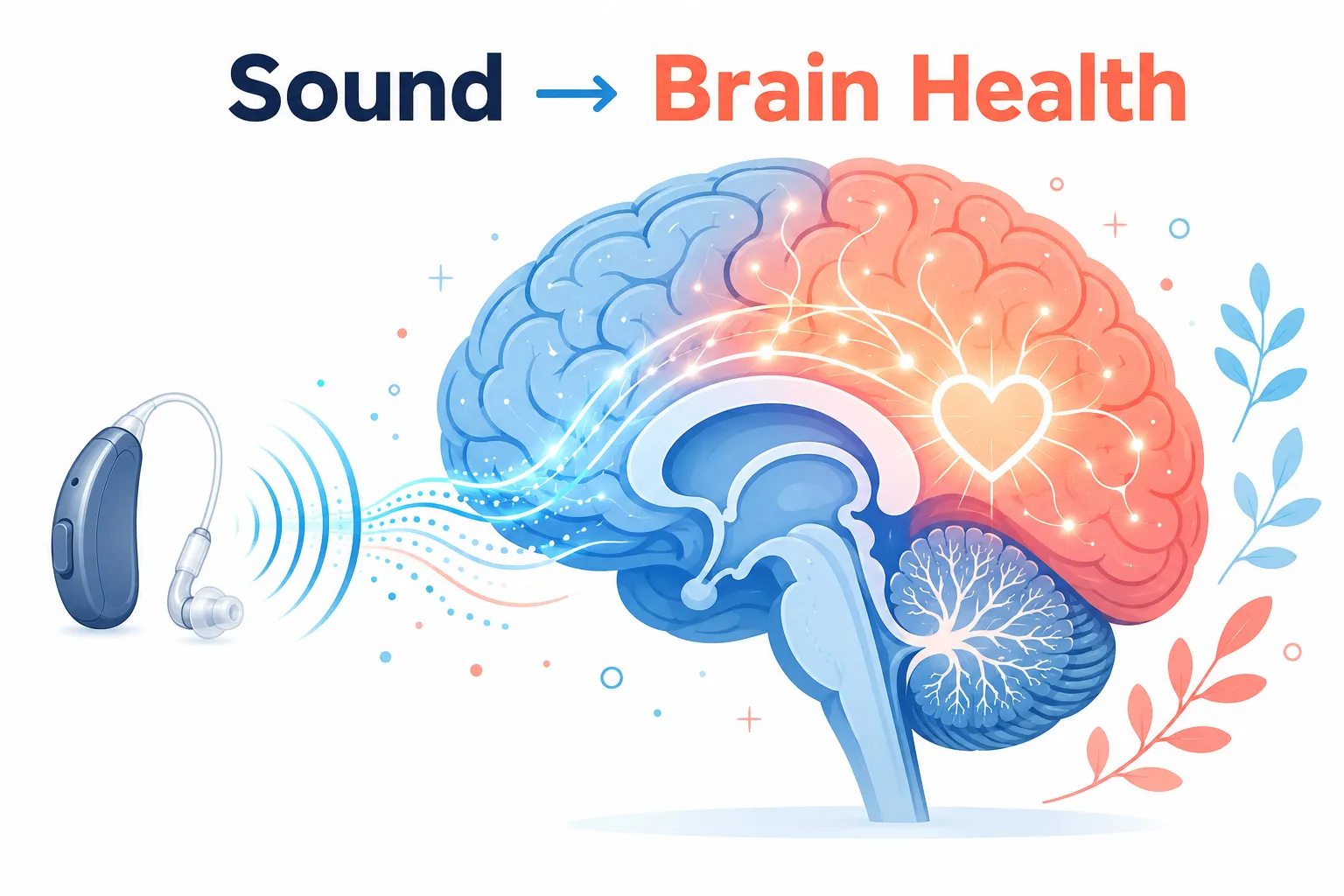
Hearing loss and dementia share a well-documented relationship, though researchers are still clarifying exactly how one drives the other. The leading explanation is that when the brain receives degraded or incomplete sound signals, it must work harder to decode speech, a process called cognitive load. Over years, this extra effort may exhaust mental resources needed for memory and reasoning [10].
Two other mechanisms are also under investigation:
- Brain atrophy: Studies using brain imaging show that people with untreated hearing loss experience faster shrinkage in auditory brain regions, including areas that overlap with memory circuits [10]
- Social isolation: Hearing loss makes conversation difficult, which often leads to withdrawal. Social isolation is itself an independent dementia risk factor [5]
The 2024 Lancet Commission on Dementia estimated that midlife hearing loss accounts for roughly 7% of potentially preventable dementia cases globally, making it the single largest modifiable risk factor on their updated list [5]. For more on how this research is evolving, see this overview of new research linking age-related hearing loss to increased dementia risk.
Can Hearing Aids Prevent Dementia, or Just Reduce Risk?
Hearing aids cannot prevent dementia outright, but consistent evidence suggests they can meaningfully reduce the risk, particularly for people who achieve real hearing improvement from their device.
A 2026 multinational study from HKUMed found that older adults with hearing loss who used hearing aids had a 9% lower risk of probable dementia than non-users. Those who reported good hearing improvement saw a 14% lower risk. Critically, users whose hearing did not improve with their aids showed no significant benefit, confirming that the device itself isn’t the magic ingredient; effective hearing restoration is [9].
A separate 2026 cohort study reinforced this, estimating that adults prescribed hearing aids had a 7-year dementia risk of 5.0%, compared to 7.5% in those without a prescription (risk ratio 0.67; 95% CI 0.37-0.97) [8]. The same study found cognitive impairment risk of 36.1% with hearing aids versus 42.4% without [8].
Bottom line: Hearing aids as a tool to reduce dementia risk represent one of the most evidence-backed, actionable interventions available today, but only when the aids are properly fitted and genuinely improving hearing.
Do All Types of Hearing Loss Increase Dementia Risk Equally?
Not equally, but most types carry some elevated risk. Age-related sensorineural hearing loss (presbycusis) is the most studied and most strongly linked to dementia, largely because it’s the most common type in older adults and tends to be progressive and bilateral [3].
Key distinctions:
| Hearing Loss Type | Dementia Risk Link | Notes |
|---|---|---|
| Age-related (sensorineural) | Strongest evidence | Most common in adults 60+ |
| Conductive (e.g., earwax, fluid) | Potentially reversible | Risk may resolve with treatment |
| Single-sided (unilateral) | Less studied; some risk | See causes of hearing loss in one ear |
| Severe/profound loss | Higher risk than mild | Earlier intervention more critical |
A 2024 JAMA Otolaryngology cohort study using Danish nationwide data showed that people with hearing loss who did not use hearing aids had a hazard ratio of 1.20 for dementia compared to those with normal hearing, a statistically meaningful elevation [4]. People who did use hearing aids had a risk closer to those without hearing loss at all [4].
For a deeper look at hearing loss and cognitive decline, the connection is more nuanced than many people realize.
What’s the Difference Between Mild and Severe Hearing Loss in Terms of Dementia Risk?
Mild hearing loss still raises dementia risk, this surprises many people who assume only severe loss matters. Research consistently shows a dose-response relationship: the greater the hearing loss, the higher the dementia risk, but even mild loss (25-40 dB) is associated with elevated risk compared to normal hearing [3].
- Mild loss (25-40 dB): Difficulty hearing soft speech, whispers, or in noisy environments
- Moderate loss (41-70 dB): Trouble following normal conversation without aids
- Severe/profound loss (71+ dB): Significant communication barriers; highest dementia risk elevation
The practical takeaway: don’t wait for hearing to become “bad enough.” Addressing mild to moderate loss early, when the brain’s auditory pathways are less compromised, likely produces better cognitive outcomes.
Who Should Be Most Concerned About Hearing Loss and Dementia?
Adults over 60 with untreated hearing loss are the primary group, but the risk is not limited to older people. The Lancet Commission specifically highlights midlife hearing loss (ages 40-65) as a critical intervention window [5].
Groups with heightened concern:
- Adults 65+ with any degree of hearing loss
- People with a family history of dementia
- Those with additional risk factors: hypertension, diabetes, social isolation, or depression
- Individuals exposed to occupational or recreational noise over many years
- Adults who notice they frequently ask people to repeat themselves or struggle in group conversations
The 2024 Lancet Commission noted that hearing aids appear especially effective in people who have hearing loss plus additional dementia risk factors [5], making this group a priority for early hearing care.
How Do You Know If You Have Hearing Loss?
Many people don’t recognize hearing loss because it develops gradually. Common early signs include:
- Turning up the TV louder than others prefer
- Frequently asking people to repeat themselves
- Struggling to follow conversations in noisy places like restaurants
- Missing high-pitched sounds (birds, doorbells, consonants like “s” and “f”)
- Feeling like others are mumbling
For a comprehensive checklist, the Recognizing Hearing Loss Symptoms guide covers what to watch for. A formal audiogram from a licensed audiologist is the gold standard for diagnosis, and it’s the necessary first step before any hearing aid can be properly fitted.
At What Age Should You Get Hearing Aids to Reduce Dementia Risk?
The earlier, the better, but “early” means as soon as hearing loss is confirmed, regardless of age. Waiting is the most common and most costly mistake.
Research suggests the brain benefits most when hearing aids are introduced before significant auditory deprivation has occurred. For age-related hearing loss, this typically means acting in your 50s or 60s rather than waiting until your 70s or 80s [5].
Common mistake: Many adults wait an average of 7-10 years after first noticing hearing difficulty before seeking help. By then, auditory brain regions may have already undergone measurable atrophy, making recovery harder. If you’re over 50 and notice any of the symptoms above, schedule an audiogram, don’t wait for the problem to feel “serious enough.”
How Long Does It Take for Hearing Aids to Make a Difference for Brain Health?
Hearing improvement in day-to-day communication can begin within days to weeks of proper fitting. Brain health benefits, however, operate on a longer timeline.
The 2026 cohort study showing reduced dementia risk tracked participants over 7 years [8]. The HKUMed study also observed outcomes over a multi-year period [9]. This doesn’t mean you need to wait years to feel benefits, reduced cognitive load, less mental fatigue, and improved social engagement can begin relatively quickly, but the protective effect on dementia risk accumulates over time.
Realistic expectations:
- Weeks 1-4: Adjustment period; the brain re-learns to process amplified sound
- Months 1-6: Noticeable improvement in conversation clarity and reduced listening fatigue
- Years 1+: Gradual reduction in cognitive load and social withdrawal
- Years 5-10: Where population-level dementia risk reduction becomes measurable in studies
What Type of Hearing Aid Is Best for Dementia Prevention?
No single hearing aid style has been proven superior for dementia prevention specifically. What matters most is how well the device restores your hearing, not the brand or form factor.
That said, features worth prioritizing include:
- Bilateral fitting (both ears) when loss is present in both, single-ear aids leave one auditory pathway understimulated
- Directional microphones for better speech clarity in noise (reduces cognitive load more effectively)
- Bluetooth connectivity for phone and TV streaming, which encourages continued social engagement
- AI-powered noise reduction, modern aids increasingly use machine learning to improve speech clarity; see how AI tools are transforming hearing loss treatment
The most important factor: work with a licensed audiologist who will fine-tune the device to your specific audiogram. An improperly fitted hearing aid, even an expensive one, may deliver poor hearing improvement and, based on the 2026 HKUMed findings, provide no significant dementia risk reduction [9].
How Much Do Hearing Aids Cost, and Does Insurance Cover Them?
In the United States as of 2026, prescription hearing aids typically range from $1,500 to $7,000 per pair, depending on technology level and provider fees. Over-the-counter (OTC) hearing aids, now widely available since FDA authorization, range from $200 to $1,500 and are suitable for adults with mild to moderate loss.
Insurance landscape:
- Medicare (traditional): Does not cover hearing aids as of 2026, though some Medicare Advantage plans do
- Medicaid: Coverage varies by state
- Private insurance: Some plans include partial coverage; check your specific plan
- Veterans Affairs: Covers hearing aids for eligible veterans, one of the most comprehensive public programs available
- Flexible Spending Accounts (FSA) / Health Savings Accounts (HSA): Hearing aids are eligible expenses
Budget-conscious options include hearing aids available on Amazon and OTC devices from major retailers. These can be a reasonable starting point for mild loss, but anyone with moderate-to-severe loss or cognitive concerns should prioritize a professional audiological evaluation.
Are There Alternatives to Hearing Aids for Hearing Loss?
Hearing aids are the most evidence-backed intervention for sensorineural hearing loss, but alternatives exist depending on the cause and severity:
- Cochlear implants: For severe to profound loss where hearing aids provide insufficient benefit; some research suggests cochlear implants may also reduce cognitive decline in eligible candidates
- Bone-anchored hearing systems: For conductive or single-sided hearing loss
- Assistive listening devices (ALDs): TV amplifiers, captioned phones, loop systems, useful as supplements but not substitutes for treating the underlying loss
- Treating reversible causes: Earwax removal (cerumen impaction is surprisingly common), fluid in the ear, or medication side effects can sometimes restore hearing without aids
- Hearing support supplements: Evidence is limited; see hearing support supplements overview for a balanced look
For most adults with age-related hearing loss, hearing aids remain the primary and most practical option.
What If Hearing Aids Don’t Help My Hearing Loss?
If a hearing aid provides little or no improvement, the first step is to return to the audiologist for reprogramming, poor fit is the most common reason aids underperform. It’s not a device failure; it’s a calibration issue.
If reprogramming doesn’t help:
- Request a different hearing aid model or technology tier
- Ask for a referral to an ENT specialist to rule out other causes
- Explore whether a cochlear implant evaluation is appropriate
- Consider whether the hearing loss type (e.g., auditory processing disorder) requires a different intervention
The 2026 HKUMed research is clear: users who reported poor improvement from their hearing aids showed no significant reduction in dementia risk [9]. This makes follow-up and proper fitting not just a comfort issue, but a genuine brain-health priority.
Can You Reduce Dementia Risk Without Hearing Aids?
Yes, hearing aids are one piece of a larger prevention picture. The 2024 Lancet Commission identified 14 modifiable risk factors for dementia [5]. Addressing hearing loss is the largest single contributor, but combining it with other strategies multiplies the benefit:
- Regular physical exercise (particularly aerobic activity)
- Blood pressure management starting in midlife
- Social engagement, maintaining friendships and community participation
- Cognitive stimulation, learning new skills, reading, puzzles
- Treating depression when present
- Limiting alcohol and avoiding smoking
- Managing diabetes and obesity
Hearing aids as a tool to reduce dementia risk work best as part of this broader lifestyle approach, not as a standalone fix.
Common Mistakes People Make When Starting to Wear Hearing Aids
Starting hearing aids is an adjustment, and several common errors reduce their effectiveness, and potentially their brain-health benefit:
- Not wearing them consistently, Part-time use limits both hearing improvement and cognitive benefit
- Skipping follow-up appointments, Most audiologists recommend 2-3 follow-ups in the first year for fine-tuning
- Expecting instant comfort, The brain needs weeks to adapt to amplified sound; initial discomfort is normal
- Buying without a professional fitting, OTC aids suit mild loss; moderate-to-severe loss needs audiological assessment
- Ignoring maintenance, Wax buildup and moisture are the top causes of poor performance; clean aids daily
- Only wearing one aid when both ears need help, Bilateral loss requires bilateral treatment for full cognitive benefit
Frequently Asked Questions
Q: Does wearing a hearing aid actually stop dementia? No hearing aid stops dementia. The evidence shows that effective hearing aid use reduces the risk of developing dementia, particularly in people with hearing loss who achieve real hearing improvement from their device [9].
Q: At what stage of hearing loss should I get a hearing aid? Most audiologists recommend hearing aids once loss reaches the mild-to-moderate range (25-40 dB or greater). For dementia risk reduction, earlier intervention is preferable, don’t wait for severe loss.
Q: How do I know if my hearing aid is actually working well enough to reduce dementia risk? The 2026 HKUMed study found that self-reported good hearing improvement was the key variable linked to reduced dementia risk [9]. If you still struggle significantly in conversation despite wearing your aid, return to your audiologist for adjustment.
Q: Is age-related hearing loss the only type linked to dementia? Age-related sensorineural hearing loss has the strongest evidence base, but other types, including hearing loss from noise exposure, also carry elevated risk when left untreated [3].
Q: Are over-the-counter hearing aids as effective as prescription aids for brain health? OTC aids can be appropriate for mild loss, but prescription aids fitted by an audiologist are more likely to achieve the level of hearing improvement associated with dementia risk reduction in research studies.
Q: How often should I have my hearing tested after age 60? Annual hearing tests are generally recommended for adults over 60, or sooner if you notice any changes in hearing ability.
Q: Can young people with hearing loss also develop dementia earlier? The Lancet Commission specifically flags midlife hearing loss (ages 40-65) as a risk window [5]. Untreated hearing loss at any adult age that goes uncorrected for years may contribute to cumulative cognitive burden.
Q: What’s the fastest way to get started with hearing aids? Book an appointment with a licensed audiologist for a full audiogram. The evaluation takes about an hour and gives you the data needed to choose the right device and settings.
Conclusion
The evidence connecting hearing health to brain health has never been stronger. As of 2026, multiple large studies confirm that hearing aids as a tool to reduce dementia risk are among the most practical, evidence-backed interventions available for older adults, and the benefit extends to those in midlife who address hearing loss early.
Actionable next steps:
- Schedule an audiogram if you haven’t had one in the past year and you’re over 50
- Work with a licensed audiologist, not just a hearing aid retailer, to ensure proper fitting
- Wear your aids consistently and attend follow-up appointments to optimize performance
- Combine hearing care with other dementia-prevention habits: exercise, social connection, blood pressure management
- Don’t wait, the 7-10 year delay most people experience before seeking help is the single most preventable risk factor in this equation
Protecting your hearing isn’t just about hearing better today. It’s about keeping your brain sharp for the decades ahead.
References
[1] The Lancet Commission on Dementia Prevention, Intervention, and Care – https://www.thelancet.com/article/S0140-6736(20)30367-6/fulltext
[2] Science Daily – Hearing Loss and Dementia Research – https://www.sciencedaily.com/releases/2024/01/240105145114.htm
[3] PubMed – Hearing Loss and Cognitive Decline – https://pubmed.ncbi.nlm.nih.gov/38175662/
[4] JAMA Otolaryngology – Hearing Aid Use and Dementia Risk (Danish Cohort) – https://jamanetwork.com/journals/jamaotolaryngology/fullarticle/2819320
[5] 2024 Update of Lancet Commission on Dementia Strengthens Case for Addressing Hearing Loss – https://ciicanet.org/2024/08/02/2024-update-of-lancet-commission-on-dementia-strengthens-case-for-addressing-hearing-loss/
[6] ENT & Audiology News – Lancet Commission 3 Final – https://www.entandaudiologynews.com/media/38676/entnd24-lancet-comm-3-final.pdf
[7] PMC12084262 – https://pmc.ncbi.nlm.nih.gov/articles/PMC12084262/
[8] PMC12718930 – Treating Hearing Loss With Hearing Aids for the Prevention of Dementia – https://pmc.ncbi.nlm.nih.gov/articles/PMC12718930/
[9] HKUMed Press Release – Effective Use of Hearing Aids May Help Reduce Dementia Risk in Older Adults (June 9, 2026) – https://www.med.hku.hk/en/news/press/20260609-hkumed-finds-effective-use-of-hearing-aids-may-help-reduce-dementia-risk-in-older-adults
[10] Johns Hopkins Medicine – How Does Hearing Loss Link to Cognitive Decline (2024) – https://www.hopkinsmedicine.org/news/articles/2024/12/how-does-hearing-loss-link-to-cognitive-decline
