Last updated: July 8, 2026
Quick Answer: Cerumen impaction occurs when earwax accumulates in the ear canal to the point where it partially or fully blocks sound from reaching the eardrum, causing muffled hearing, fullness, and sometimes ringing. It affects roughly 5% of adults and 10% of children in the U.S. [1] Most cases can be resolved safely with over-the-counter softening drops or professional removal, but the wrong approach (like cotton swabs) often makes things worse.
Key Takeaways
- Cerumen impaction and hearing loss from earwax buildup is one of the most common, reversible causes of reduced hearing in all age groups.
- The ear is self-cleaning; most people never need to manually remove wax.
- Cotton swabs push wax deeper and are a leading cause of impaction, avoid them.
- Over-the-counter softening drops (carbamide peroxide or saline) are the safest first home step.
- Ear candling is ineffective and dangerous; skip it entirely.
- Cerumen impaction leads to roughly 12 million doctor visits and 8 million removal procedures in the U.S. each year. [6]
- Older adults, hearing aid users, and people with narrow ear canals face the highest risk.
- Untreated impaction can worsen hearing, cause tinnitus, dizziness, and mask other ear conditions.
- Professional removal (irrigation, microsuction, or curette) is safe, fast, and often covered by insurance.
- Prevention is straightforward: avoid inserting objects into the ear and schedule regular check-ups if prone to buildup.
What Is Cerumen Impaction and How Does It Cause Hearing Loss?
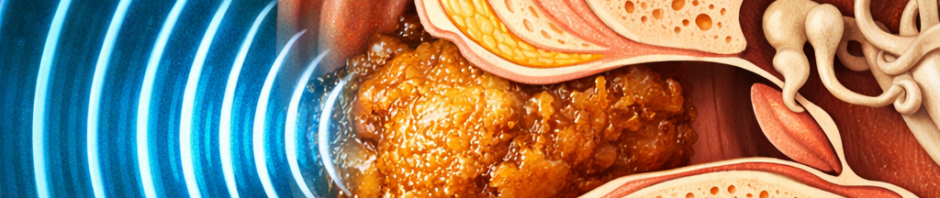
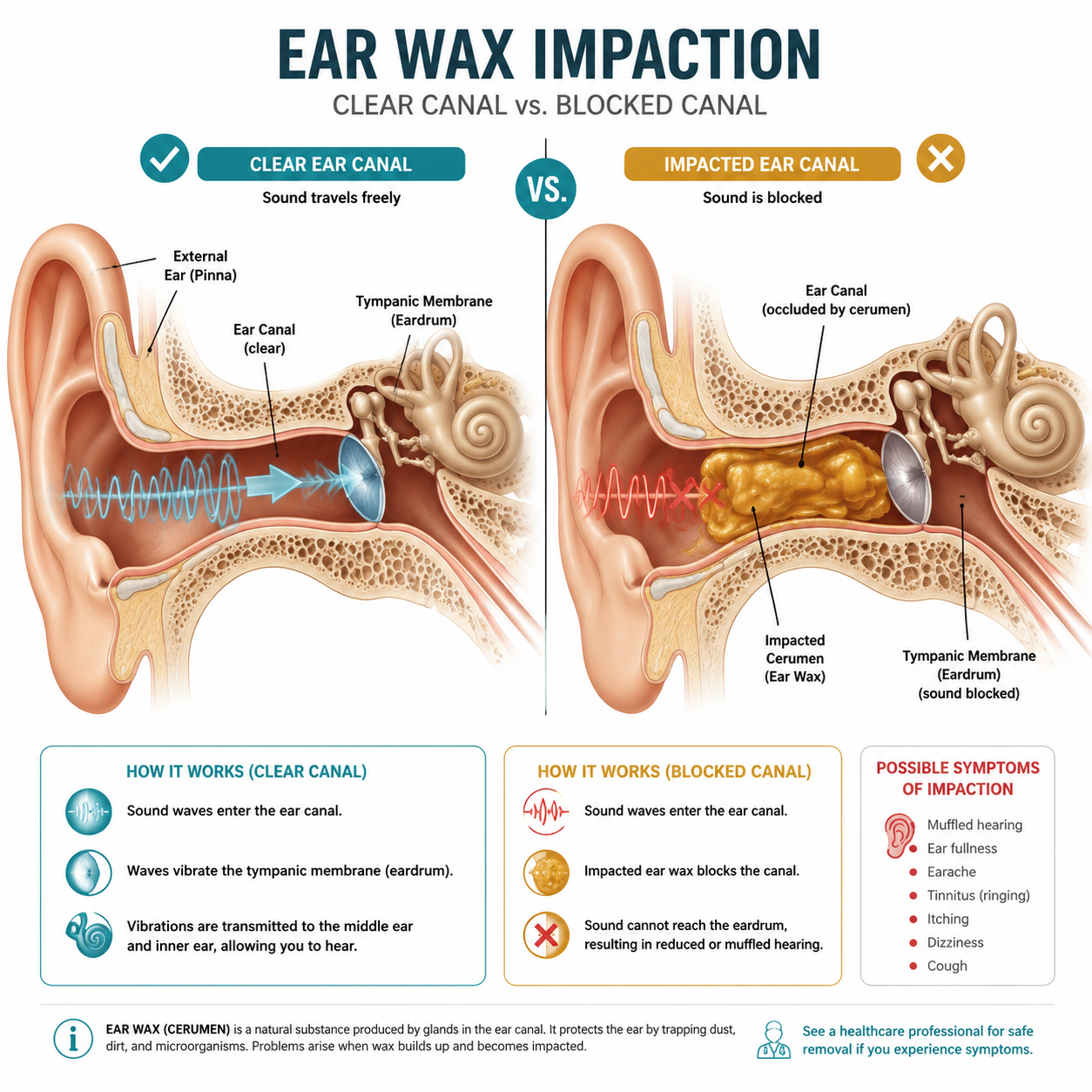
Cerumen impaction is the medical term for earwax that has built up enough in the ear canal to cause symptoms, including reduced hearing. The wax physically blocks sound waves from traveling down the canal to vibrate the eardrum, which is the first step in the hearing process. [2]
Cerumen (earwax) is a normal, protective substance. It traps dust, debris, and bacteria, and keeps the ear canal from drying out. The problem starts when wax accumulates faster than the ear can expel it, or when something pushes it inward rather than letting it migrate out naturally.
How the blockage affects hearing:
- Wax acts like a plug, absorbing and scattering sound energy before it reaches the eardrum.
- Even a partial blockage can muffle speech and make it harder to hear in noisy environments.
- Full impaction can cause a noticeable drop in hearing in the affected ear, sometimes mistaken for sudden hearing loss in one ear.
Common symptoms of cerumen impaction include: earache, a feeling of fullness or pressure, tinnitus (ringing or buzzing), dizziness, itchiness, and occasional ear discharge. [2]
What’s the Difference Between Cerumen Impaction and Regular Earwax?
Regular earwax is healthy and expected. Cerumen impaction is the point where wax buildup causes actual symptoms or is visible as a complete blockage on exam. Not all earwax requires removal, in fact, most earwax clears on its own.
Regular earwax:
- Present in small to moderate amounts
- Migrates outward naturally with jaw movement [3]
- Causes no symptoms
Cerumen impaction:
- Fills or nearly fills the ear canal
- Causes at least one symptom (hearing loss, fullness, pain, tinnitus)
- Does not clear without intervention
💡 Key distinction: If ears feel fine and hearing is normal, the wax is doing its job. Treatment is only needed when symptoms appear.
How Much Earwax Buildup Causes Hearing Problems?
There’s no single measurement that defines “too much”, it depends on the size of the ear canal and where the wax sits. Wax that sits near the eardrum causes more hearing disruption than wax near the canal opening, even if the volume is similar.
Clinically, impaction is diagnosed when wax occludes the ear canal enough to prevent a clear view of the eardrum and is associated with symptoms. [6] Some people experience noticeable hearing loss with a relatively small amount of wax if it’s tightly packed against the eardrum.
Who Is Most at Risk for Cerumen Impaction?
Cerumen impaction affects approximately 10% of children, 5% of adults, and up to 30% of older adults and people with cognitive impairments. [1][7] Certain groups produce more wax, have narrower canals, or interfere with the ear’s natural cleaning process.
Higher-risk groups:
- Adults over 55 (wax becomes drier and harder to migrate)
- Children (smaller ear canals)
- Hearing aid users (devices block natural wax migration, see hearing aid repair tips for related maintenance advice)
- Regular earplug users
- People with narrow or hairy ear canals
- Those with a history of ear surgeries or chronic ear conditions
- People with cognitive impairments who cannot report symptoms [7]
Can Earwax Impaction Go Away on Its Own?
Sometimes, yes. Mild wax buildup often resolves without treatment because the ear’s self-cleaning mechanism, aided by jaw movements during talking and chewing, gradually moves wax toward the outer ear. [3]
However, true cerumen impaction (with symptoms) is less likely to clear on its own, especially in older adults whose wax is drier and stiffer. In these cases, softening drops or professional removal are needed.
Choose the “wait and see” approach if:
- Symptoms are very mild (slight fullness, no pain)
- Hearing is not significantly affected
- No history of ear surgery, perforated eardrum, or ear tubes
Seek treatment sooner if:
- Hearing loss is noticeable or worsening
- Pain, discharge, or dizziness are present
- Symptoms have lasted more than a week
Safe Ways to Remove Earwax at Home vs. Doctor Removal
Both home and professional options work well for cerumen impaction and hearing loss from earwax buildup, the right choice depends on severity and individual risk factors.
Safe Home Removal Options
1. Softening drops (best first step) Over-the-counter drops containing carbamide peroxide, hydrogen peroxide, or saline can soften impacted wax over several days, allowing it to drain on its own. [4] These are the safest, most evidence-backed home option.
How to use:
- Tilt the affected ear upward.
- Apply the recommended number of drops.
- Stay still for 1-5 minutes.
- Tilt the ear downward to drain.
- Repeat once or twice daily for up to 4-5 days.
2. Warm water rinse After softening drops have loosened the wax, a gentle warm water rinse (using a bulb syringe) can flush it out. Use body-temperature water, cold or hot water can cause dizziness.
Do NOT use at home if:
- There is a perforated eardrum or history of ear surgery
- Ear tubes are present
- Pain or discharge is present
Professional Removal Methods
A doctor or audiologist can remove impacted wax using: [4]
- Irrigation: Warm water or saline flushed into the canal
- Microsuction: A small vacuum that gently suctions wax out (preferred for sensitive ears)
- Curette: A small scoop to manually extract wax
Professional removal is faster, safer for complex cases, and recommended for anyone with a history of ear problems.
Can I Use Cotton Swabs to Remove Impacted Earwax Safely?
No. Cotton swabs are one of the most common causes of cerumen impaction. Rather than removing wax, they push it deeper into the canal, where it compacts against the eardrum. [3]
The American Academy of Otolaryngology advises against inserting any object, including cotton swabs, bobby pins, or ear picks, into the ear canal. [4]
⚠️ Common mistake: Many people use cotton swabs daily as part of ear hygiene. This habit actively works against the ear’s natural cleaning process and is a leading driver of impaction.
Cotton swabs are fine for cleaning the outer ear (the visible part). They should never enter the canal.
Earwax Removal Drops vs. Irrigation: Which Works Better?
For most people with mild to moderate cerumen impaction, softening drops followed by irrigation is the most effective home combination. Drops alone may work for softer wax; irrigation alone is less effective if wax is hard and dry.
| Method | Best For | Pros | Cons |
|---|---|---|---|
| Softening drops | Mild, moderate buildup | Safe, inexpensive, OTC | Takes several days |
| Warm water irrigation | After softening drops | Flushes wax quickly | Avoid with perforated eardrum |
| Professional microsuction | Hard wax, sensitive ears | Fast, precise, dry method | Requires clinic visit |
| Ear candling | Not recommended | None proven | Risk of burns, wax deposits, injury [4] |
How Much Does Professional Earwax Removal Cost?
Professional earwax removal in the U.S. typically costs between $100 and $250 per visit without insurance, depending on the method and provider. Many insurance plans, including Medicare, cover the procedure when it is medically indicated (i.e., when impaction is causing symptoms). [6]
Microsuction tends to cost slightly more than irrigation but is often preferred for people with a history of ear problems. Calling ahead to confirm coverage is always a good idea.
Can Hearing Aids Cause Cerumen Impaction?
Yes, hearing aids are a known risk factor for cerumen impaction. The device sits in the ear canal and physically blocks the natural outward migration of wax. [1] Wax can also clog hearing aid receivers and microphones, reducing sound quality, a problem distinct from but related to impaction.
For hearing aid users:
- Clean devices daily using the manufacturer’s recommended tools
- Schedule regular ear check-ups (every 6-12 months)
- Ask your audiologist about wax guards and filters
If hearing aids are suddenly sounding muffled, check both the device and the ear canal, it may be a wax issue in one or both.
What Happens If You Don’t Treat Impacted Earwax?
Untreated cerumen impaction can lead to progressive hearing loss, persistent tinnitus, ear pain, and dizziness. [1] It can also prevent a doctor from seeing the eardrum clearly, which may delay diagnosis of other ear conditions such as infection or a perforated eardrum.
For older adults, untreated hearing loss from any cause, including something as simple as earwax, is associated with increased cognitive load and social withdrawal. For more on that connection, see hearing loss and cognitive decline.
Impaction can also worsen tinnitus. If ringing in the ears accompanies the blockage, clearing the wax often resolves it, but persistent tinnitus after removal warrants further evaluation. See the complete guide to tinnitus for more detail.
When Should You See a Doctor for Earwax Buildup?
See a doctor promptly if any of the following apply: [2][4]
- Hearing loss is sudden, severe, or in one ear only
- Pain, discharge, or bleeding is present
- Dizziness or balance problems accompany the blockage
- Home treatment has not worked after 4-5 days
- There is a history of perforated eardrum, ear surgery, or ear tubes
- Symptoms return frequently (more than 2-3 times per year)
Sudden muffled hearing in one ear can occasionally signal something more serious than wax. If in doubt, get it checked, a quick ear exam takes minutes and rules out more serious causes. Also review common hearing loss symptoms to understand the full picture.
How to Prevent Earwax Impaction from Happening Again
Prevention is straightforward for most people. The goal is to support the ear’s natural cleaning process rather than interfere with it.
Practical prevention steps:
- Stop using cotton swabs inside the canal, this is the single most impactful change.
- Use monthly softening drops (saline or mineral oil) if prone to buildup, as recommended by a provider. [4]
- Clean hearing aids regularly and use wax guards.
- Schedule annual ear exams if impaction has occurred before.
- Avoid prolonged earplug use where possible, or take regular breaks.
- After swimming, tilt the head to drain water, retained moisture can soften wax and alter its consistency.
For those with age-related hearing concerns, regular ear checks are especially important since wax texture changes with age and impaction becomes more likely.
Frequently Asked Questions
Q: Is cerumen impaction the same as an ear infection? No. Cerumen impaction is a physical blockage of wax. An ear infection involves bacterial or viral inflammation of the ear canal or middle ear. Both can cause ear pain and muffled hearing, but they require different treatments. A doctor can distinguish between them on exam.
Q: Can cerumen impaction cause dizziness? Yes. Wax pressing against the eardrum can stimulate the vestibular system and cause mild dizziness or a sensation of imbalance. [2] This typically resolves once the wax is removed. If dizziness persists after removal, see a doctor, it may indicate a separate condition. Also see vertigo and hearing loss for related information.
Q: How long does it take for earwax removal drops to work? Most OTC softening drops work within 3-5 days of regular use. If symptoms haven’t improved after 5 days, see a healthcare provider rather than continuing home treatment. [4]
Q: Can children get cerumen impaction? Yes. Cerumen impaction affects about 10% of children. [1] Children should not use OTC ear drops without a doctor’s guidance, and cotton swabs should never be used in a child’s ear canal.
Q: Does stress or diet affect earwax production? There is no strong clinical evidence that diet or stress directly causes earwax impaction. Genetics and anatomy (canal size, hair) are the primary drivers of how much wax a person produces.
Q: Is microsuction better than irrigation? Microsuction is generally preferred for people with a history of ear surgery, perforated eardrums, or very hard wax. Irrigation is effective for most routine cases. Both are safe when performed by a trained provider. [4]
Q: Can earwax impaction cause tinnitus? Yes. Pressure from impacted wax on the eardrum is a recognized cause of tinnitus (ringing or buzzing). [2] In many cases, clearing the wax resolves the tinnitus. If ringing continues after removal, further evaluation is needed.
Q: How often should ears be professionally cleaned? Most people never need professional ear cleaning. Those prone to impaction (hearing aid users, older adults, people with narrow canals) may benefit from a check every 6-12 months. [7]
Conclusion
Cerumen impaction and hearing loss from earwax buildup is one of the most common and most treatable causes of muffled hearing, yet it’s also one of the most mismanaged, largely because of the cotton swab habit. The ear is designed to clean itself, and most interventions do more harm than good unless wax is actually causing symptoms.
Actionable next steps:
- Stop using cotton swabs inside the ear canal starting today.
- If experiencing muffled hearing, fullness, or ringing, try OTC softening drops for 3-5 days.
- If symptoms persist or are severe, book an appointment with a primary care doctor or audiologist for professional removal.
- If impaction recurs regularly, ask a provider about a monthly saline or mineral oil maintenance routine.
- Hearing aid users should add daily device cleaning and twice-yearly ear exams to their routine.
Addressing earwax buildup is quick, inexpensive, and often restores hearing fully, making it one of the easiest hearing health wins available.
References
[1] Ear Wax Buildup & Blockage – https://my.clevelandclinic.org/health/diseases/14428-ear-wax-buildup–blockage?utm_source=openai
[2] Earwax Blockage: Symptoms & Causes – https://www.mayoclinic.org/diseases-conditions/earwax-blockage/symptoms-causes/syc-20353004?utm_source=openai
[3] What To Do For Earwax – https://www.health.harvard.edu/healthy-aging-and-longevity/what-to-do-for-earwax?utm_source=openai
[4] Earwax Blockage: Diagnosis & Treatment – https://www.mayoclinic.org/diseases-conditions/earwax-blockage/diagnosis-treatment/drc-20353007?utm_source=openai
[6] Cerumen Impaction – StatPearls – https://www.ncbi.nlm.nih.gov/sites/books/NBK448155/?utm_source=openai
[7] Cerumen Impaction – BMJ Best Practice – https://bestpractice.bmj.com/topics/en-us/1032?utm_source=openai
