
Last updated: July 4, 2026
Quick Answer: Laryngitis is inflammation of the larynx (voice box) that causes hoarseness, voice loss, and throat discomfort. It can also trigger ear pain, not because the ears are infected, but because the throat and ears share nerve pathways that “refer” pain from one area to the other. Most cases resolve on their own within one to two weeks, but hoarseness combined with ear pain lasting longer than two weeks warrants a professional evaluation.
Key Takeaways
- Laryngitis inflames the vocal cords, causing hoarseness, a weak voice, or complete voice loss [1]
- Ear pain during laryngitis is usually referred pain traveling along shared nerve pathways, not a separate ear infection
- Acute laryngitis typically clears up within 1-2 weeks; chronic laryngitis lasts longer and needs investigation [1]
- Viral infections are the most common cause, so antibiotics usually don’t help [2]
- Voice rest, hydration, and avoiding irritants are the most effective home treatments [2]
- Acid reflux and allergies are common but often overlooked causes of chronic laryngitis [1]
- See a doctor if hoarseness lasts more than 2 weeks, or if you have difficulty breathing, blood in your cough, or a high fever [1]
- Laryngitis rarely causes permanent voice damage unless the underlying cause goes untreated for months
What Is Laryngitis and How Does It Affect Your Voice?
Laryngitis is inflammation of the larynx, the structure in your throat that houses the vocal cords. When the vocal cords swell, they can’t vibrate normally, which is why the voice becomes hoarse, weak, or disappears entirely [1].
Two main types:
| Type | Duration | Common Cause |
|---|---|---|
| Acute laryngitis | Up to 2-3 weeks | Viral infection, vocal strain |
| Chronic laryngitis | More than 3 weeks | Acid reflux, smoking, allergens, overuse |
Typical symptoms include [1]:
- Hoarseness or a raspy voice
- Weak or lost voice
- Tickling or rawness in the throat
- Dry cough
- Sore or dry throat
Common mistake: Many people push through and keep talking, which worsens swelling. Voice rest, even partial rest, is one of the most effective things you can do early on.
Why Does Laryngitis Cause Ear Pain?
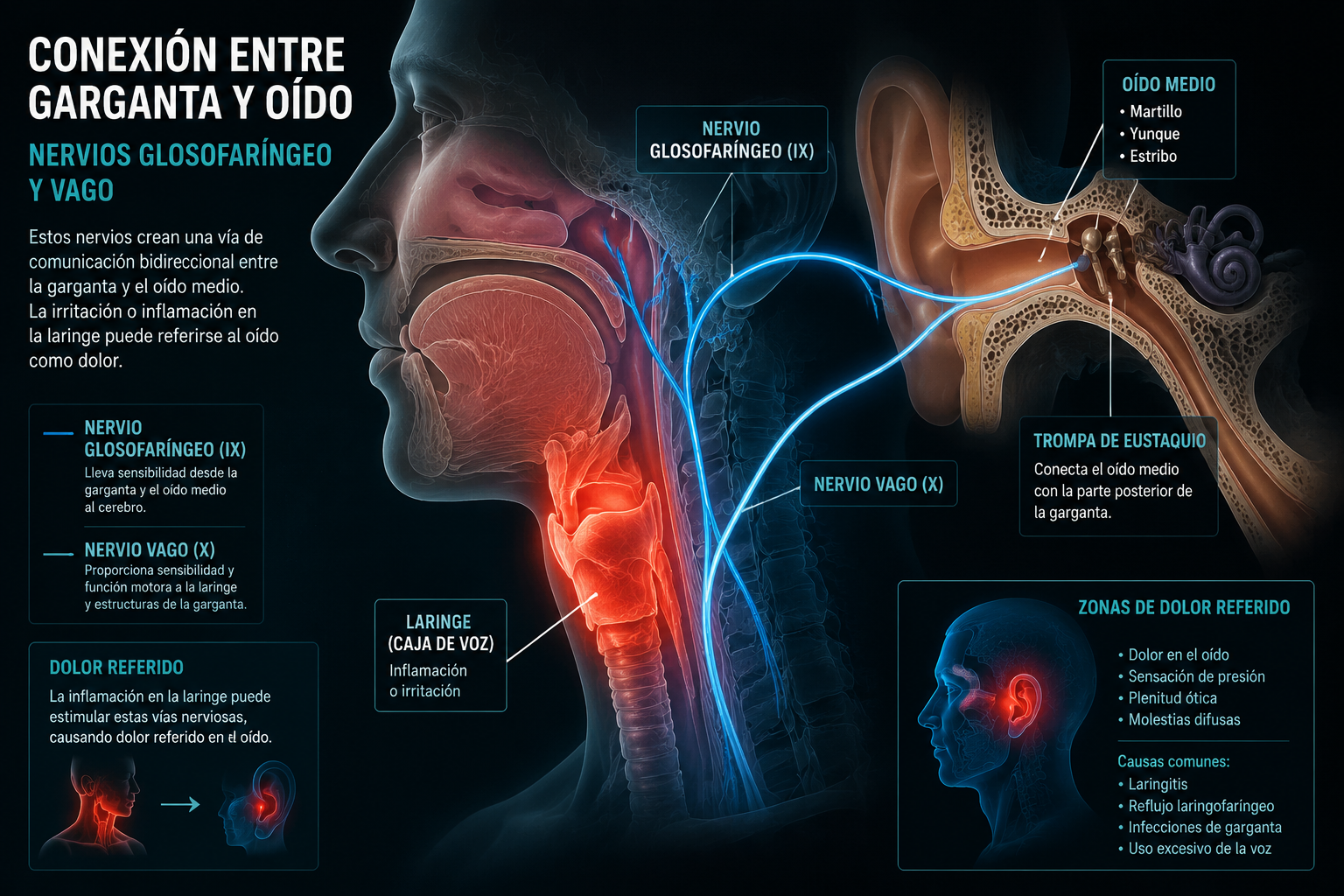
Ear pain during laryngitis is almost always referred pain, not a sign that the ears themselves are infected or damaged. The throat and ears share overlapping nerve supply, particularly the glossopharyngeal nerve (cranial nerve IX) and branches of the vagus nerve, so inflammation in the throat sends pain signals that the brain interprets as coming from the ear [2].
This is the same mechanism that causes ear pain after tonsil surgery, or why some people feel ear discomfort during a strep infection. The ear itself is structurally fine; it’s just receiving misdirected pain signals from an inflamed neighbor.
💡 Key point: If your ear pain started at the same time as your hoarse voice and sore throat, referred pain from laryngitis is the most likely explanation. If the ear pain is severe, comes with discharge, or persists after the throat heals, get the ear checked separately.
For a deeper look at how throat conditions trigger ear symptoms, see how tonsillitis and ear pain are connected, the nerve pathway mechanics are very similar.
What Causes Laryngitis Besides Vocal Strain?
Vocal overuse gets most of the attention, but laryngitis has several other common triggers [1]:
- Viral infections, the most frequent cause (cold, flu, COVID-19)
- Bacterial infections, less common, but possible
- Acid reflux (GERD), stomach acid irritates the larynx from below
- Allergies, postnasal drip and airway inflammation
- Smoke and chemical irritants, including secondhand smoke
- Alcohol and caffeine, dehydrate the vocal cord mucosa
- Chronic sinusitis, ongoing drainage irritates the larynx
Choose this framing: If your laryngitis keeps coming back or never fully clears, acid reflux or allergies are the most likely culprits, not repeated infections.
Can Allergies or Acid Reflux Cause Laryngitis Symptoms?
Yes, both are leading causes of chronic laryngitis, and they’re frequently missed because neither causes the dramatic sore throat people associate with infection [1].
- Allergic laryngitis: Postnasal drip coats the vocal cords with mucus and inflammatory cells. Symptoms tend to be seasonal or triggered by specific allergens.
- Laryngopharyngeal reflux (LPR): Acid from the stomach reaches the larynx, causing chronic hoarseness, throat clearing, and a lump-in-throat sensation. Unlike classic heartburn, LPR often has no obvious burning sensation, making it easy to overlook.
If your voice is consistently hoarse in the morning, or you wake with a bitter taste and throat irritation, LPR is worth discussing with a doctor.
How Long Does Laryngitis Last and When Should You See a Doctor?
Acute laryngitis caused by a viral infection usually resolves within 7-14 days with basic home care [1]. Laryngitis from vocal strain alone can clear in just a few days of rest.
See a doctor if:
- Hoarseness lasts more than 2 weeks [1]
- You have difficulty breathing or swallowing
- You’re coughing up blood
- You have a high or persistent fever
- You’re a professional voice user (singer, teacher, public speaker) and symptoms aren’t improving
Persistent symptoms may require a laryngoscopy, a procedure where an ENT specialist uses a small camera to examine the vocal cords directly [3]. This rules out polyps, nodules, or, in rare cases, more serious conditions.
What’s the Difference Between Laryngitis and Strep Throat?
Both cause throat pain and discomfort, but they’re different conditions affecting different structures.
| Feature | Laryngitis | Strep Throat |
|---|---|---|
| Primary location | Larynx (voice box) | Tonsils and pharynx |
| Main symptom | Hoarseness / voice loss | Severe sore throat, pain on swallowing |
| Fever | Usually mild or absent | Often high (101°F+) |
| Cause | Usually viral | Bacterial (Group A Streptococcus) |
| Antibiotics needed? | Rarely | Yes |
| White patches in throat | No | Common |
Edge case: It’s possible to have both at the same time, especially during a bad respiratory infection. If you have significant throat pain, fever, and swollen lymph nodes alongside hoarseness, a strep test is worth doing.
Is Laryngitis Contagious and How Does It Spread?
Laryngitis caused by a viral or bacterial infection is contagious. It spreads the same way as colds and flu, through respiratory droplets, close contact, and touching contaminated surfaces then touching your face [1].
Laryngitis caused by vocal strain, acid reflux, or allergies is not contagious.
Practical rule: Assume laryngitis is contagious for the first 5-7 days, especially if you have other cold symptoms. Wash hands frequently, avoid sharing drinks or utensils, and cover your mouth when coughing.
How Do You Treat Laryngitis at Home?
Most cases of acute laryngitis respond well to home care [2]:
- Rest your voice, avoid whispering (it strains the cords more than soft speaking)
- Stay hydrated, drink plenty of water; warm liquids like herbal tea with honey can soothe the throat
- Use a humidifier, moist air reduces irritation to swollen vocal cords
- Avoid irritants, stay away from smoke, alcohol, and caffeine
- Try steam inhalation, breathing steam from a bowl of hot water (not boiling) can temporarily ease discomfort
- Over-the-counter pain relief, ibuprofen or acetaminophen can reduce inflammation and ease throat and ear pain
🍯 Honey and warm water is one of the most consistently recommended home remedies for throat irritation, it coats the mucosa and has mild antimicrobial properties.
What Are the Best Remedies for Voice Hoarseness From Laryngitis?
For hoarseness specifically, the most effective approach combines voice rest with mucosal hydration [2]:
- Drink 8+ glasses of water daily, hydrated vocal cords heal faster
- Avoid throat clearing, it’s traumatic to already-swollen cords; try a gentle swallow instead
- Use a personal steam inhaler, 10-15 minutes twice daily helps
- Limit caffeine and alcohol, both dehydrate the mucosa
- Avoid whispering, it creates more tension than normal soft speech
For professional voice users, a speech-language pathologist can provide targeted vocal hygiene strategies to speed recovery and prevent recurrence.
When Is Laryngitis Serious and Requires Antibiotics?
Antibiotics are only appropriate when laryngitis is caused by a bacterial infection, which is uncommon, the majority of cases are viral [2]. A doctor may prescribe antibiotics if:
- There’s confirmed bacterial infection (e.g., strep)
- Symptoms are severe and worsening after 7-10 days
- The patient is immunocompromised
Do not pressure a doctor for antibiotics for a typical viral laryngitis case. They won’t speed recovery and may cause side effects.
Corticosteroids are occasionally prescribed for severe cases (e.g., a singer with an important performance) to rapidly reduce inflammation, but this is a short-term measure, not a routine treatment [3].
Can Laryngitis Cause Permanent Voice Damage?
In most cases, no, acute laryngitis heals completely without lasting effects [1]. However, chronic laryngitis left untreated can lead to:
- Persistent hoarseness
- Vocal cord nodules or polyps (from repeated strain)
- Scarring of the vocal cords in severe or prolonged cases
The risk of permanent damage rises significantly if the underlying cause (acid reflux, smoking, chronic vocal overuse) is never addressed. Anyone with hoarseness lasting more than 2 weeks should have their vocal cords examined.
If you notice any associated hearing changes or ringing in the ears during a throat illness, it’s worth reading about tonsil stones and ear pressure and chronic tonsillitis and hearing loss, these conditions share similar referred-pain and pressure mechanisms.
What Should You Avoid Eating and Drinking With Laryngitis?
Certain foods and drinks worsen laryngeal inflammation or delay healing [1]:
Avoid or limit:
- Alcohol (dehydrates and irritates)
- Caffeine (coffee, energy drinks, black tea)
- Spicy foods (can trigger acid reflux, which worsens laryngitis)
- Dairy products for some people (may increase mucus thickness)
- Very hot or very cold drinks (temperature extremes can irritate)
- Carbonated drinks (can increase reflux)
Better choices:
- Warm water with honey and lemon
- Herbal teas (chamomile, ginger, licorice root)
- Broths and soups
- Room-temperature water throughout the day
How to Prevent Laryngitis If You Use Your Voice a Lot
Teachers, singers, coaches, and public speakers are at higher risk for recurrent laryngitis. Prevention focuses on vocal hygiene and reducing irritant exposure [1]:
- Stay well hydrated, the single most important habit
- Warm up your voice before heavy use, just as athletes warm up muscles
- Take vocal breaks during long speaking sessions
- Avoid smoking and secondhand smoke
- Manage acid reflux, elevate the head of your bed, avoid late meals
- Use a microphone when speaking to large groups instead of projecting
- Treat allergies proactively to reduce postnasal drip
If you experience frequent bouts of laryngitis, voice changes, and ear pain, an ENT specialist can assess whether structural issues or chronic reflux are contributing.
Does Laryngitis Go Away on Its Own or Do You Need Treatment?
Acute laryngitis almost always resolves on its own with rest and basic home care within 1-2 weeks [1][2]. Treatment is supportive, there’s no medication that cures viral laryngitis faster.
When you need professional treatment:
- Symptoms last beyond 2 weeks
- Breathing becomes difficult
- Symptoms keep recurring (more than 3-4 times per year)
- You’re a professional voice user and recovery is slow
Chronic laryngitis, by contrast, usually requires identifying and treating the root cause, whether that’s GERD, allergies, or vocal misuse, before the voice fully recovers.
Frequently Asked Questions
Q: Can laryngitis cause ringing in the ears? Laryngitis itself doesn’t directly cause tinnitus, but the same viral infection triggering laryngitis can occasionally affect the inner ear. If you experience ringing alongside throat symptoms, see our guide to tinnitus for context on when ringing in the ears warrants evaluation.
Q: Is it normal to have ear pain with laryngitis? Yes. Referred pain from the throat to the ears via shared nerve pathways (glossopharyngeal and vagus nerves) is a well-recognized phenomenon. It doesn’t mean the ears are infected [2].
Q: Can I exercise with laryngitis? Light activity is generally fine, but intense exercise increases breathing through the mouth, which dries and further irritates the vocal cords. Rest is better for the first few days.
Q: How do I know if my ear pain is from laryngitis or an ear infection? Ear infections typically cause localized ear pain, muffled hearing, or discharge from the ear canal. Referred pain from laryngitis usually coincides with throat symptoms and doesn’t cause hearing changes or discharge. If unsure, see a doctor.
Q: Can children get laryngitis? Yes, though in young children, laryngeal swelling can be more serious (croup is a related condition). Any child with a barking cough, stridor (high-pitched breathing), or difficulty breathing needs prompt medical attention.
Q: Should I use throat lozenges for laryngitis? Menthol or anesthetic lozenges can temporarily soothe discomfort, but they don’t treat the underlying inflammation. Some lozenges with benzocaine can numb the throat, which may actually encourage overuse of the voice, use with caution.
Q: Can laryngitis spread to the lungs? In rare cases, a laryngeal infection can spread to the lower respiratory tract, causing bronchitis or pneumonia. This is more likely in people who are immunocompromised or elderly. Worsening cough with fever and chest symptoms warrants medical evaluation [1].
Q: Does whispering help rest the voice? No, whispering actually creates more tension on the vocal cords than soft, normal speech. True voice rest means speaking as little as possible, at a comfortable soft volume when necessary.
Q: Can stress cause laryngitis? Psychological stress doesn’t directly inflame the larynx, but it can cause muscle tension in the throat, leading to a condition called muscle tension dysphonia, which mimics laryngitis symptoms.
Q: How is chronic laryngitis diagnosed? A doctor will review your history and may perform a laryngoscopy, inserting a small flexible camera through the nose to view the vocal cords directly [3]. This identifies inflammation, nodules, polyps, or signs of reflux damage.
Conclusion
Laryngitis, voice changes, and ear pain are more closely linked than most people realize. The shared nerve pathways between the throat and ears mean that inflammation in the larynx regularly produces referred ear pain, a confusing symptom that’s actually a normal part of the condition, not a sign of a separate ear problem.
Actionable next steps:
- Rest your voice at the first sign of hoarseness, don’t push through it
- Hydrate consistently with water and warm, soothing drinks
- Avoid alcohol, caffeine, and spicy foods until symptoms resolve
- Track your symptoms, note when they started and whether ear pain, fever, or breathing difficulty develops
- See a doctor if hoarseness lasts more than 2 weeks, or sooner if you have difficulty breathing, blood in your cough, or severe ear pain
- Address underlying causes like acid reflux or allergies if laryngitis keeps recurring
For anyone experiencing ear-related symptoms alongside throat illness, exploring the vagus nerve’s role in hearing health provides useful background on why the throat-ear connection is so consistent. And if throat symptoms are accompanied by any changes in hearing, a review of common causes of hearing changes is a sensible step.
Most cases of laryngitis are temporary and fully reversible. The key is not ignoring symptoms that linger, because when throat inflammation and ear pain persist together, an ENT evaluation can catch the rare cases where something more needs attention.
References
[1] Laryngitis, Symptoms and Causes – https://www.mayoclinic.org/diseases-conditions/laryngitis/symptoms-causes/syc-20374262?utm_source=openai
[2] Laryngitis – Johns Hopkins Medicine – https://www.hopkinsmedicine.org/health/conditions-and-diseases/laryngitis?utm_source=openai
[3] Laryngitis – Merck Manuals Professional Edition – https://www.merckmanuals.com/professional/ear-nose-and-throat-disorders/laryngeal-disorders/laryngitis?utm_source=openai
