
Last updated: June 7, 2026
Many hearing aid users experience sudden sound quality issues or complete device failure, leading to frustration and communication difficulties. While some common problems can be resolved with simple at-home troubleshooting, many complex issues require professional hearing aid repair to restore optimal function and ensure longevity. Understanding when to seek expert help and what to expect from the repair process is crucial for maintaining your auditory health and investment in these vital devices.
Key Takeaways
- Initial Troubleshooting: Many minor hearing aid issues like no sound or weak sound can be fixed at home by changing batteries, cleaning earwax traps, or checking tubing.
- Professional Intervention: For persistent problems, internal component failures, or physical damage, professional hearing aid repair is necessary.
- Repair Costs: Out-of-warranty repairs typically range from $190 to $496, with manufacturer repairs often costing $250-$350 per device [7, 10, 11, 12].
- Warranty Importance: Warranties are crucial for reducing repair costs; unauthorized DIY repairs or severe damage can void them.
- Insurance Coverage: Original Medicare does not cover hearing aid repairs, but many Medicare Advantage plans do [4].
- Water Damage: While challenging, water-damaged hearing aids can sometimes be repaired by professionals if addressed promptly.
- Repair Timeframes: Simple repairs can be same-day, while manufacturer repairs may take two weeks or more [2, 11].
- Regular Maintenance: Professional cleaning and programming adjustments can prevent many common repair needs and extend device lifespan.
How Can I Troubleshoot Common Hearing Aid Problems at Home?
You can often troubleshoot common hearing aid problems at home by performing simple checks and maintenance steps before seeking professional help. These self-checks address many frequent issues such as no sound, weak sound, or whistling, potentially saving you a trip to an audiologist.
The first step in any hearing aid issue is to perform a systematic check of common culprits. Approximately 13% of in-the-ear (ITE) hearing aids, for instance, face issues related to earwax blocking receivers [8].
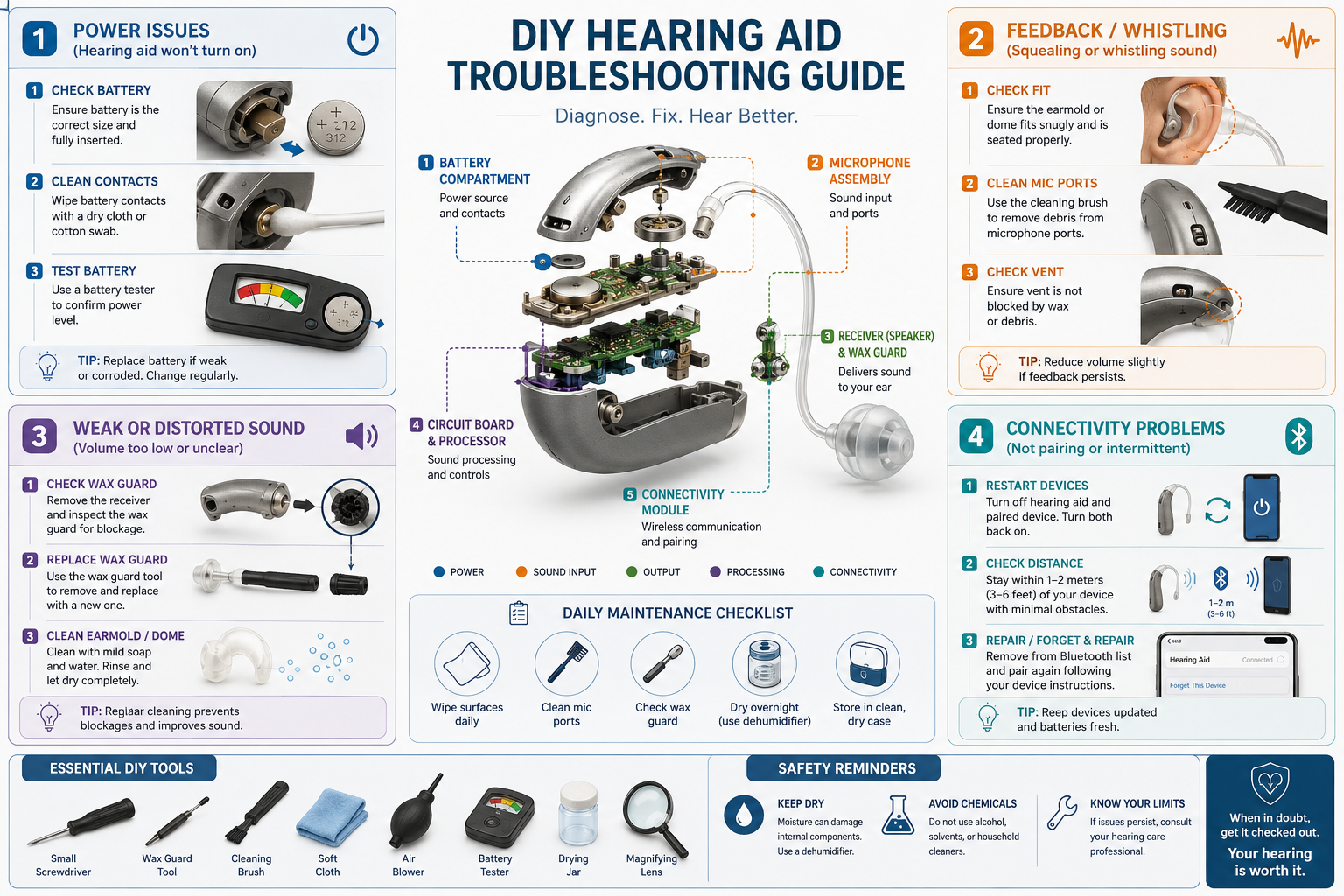
Here’s a practical troubleshooting guide:
No Sound or Weak Sound:
- Check the battery: This is the most common reason for a hearing aid not working. Replace disposable batteries with a fresh one or ensure rechargeable devices are fully charged [7]. Some rechargeable batteries may no longer last all day and indicate a repair is needed [7].
- Clean the earwax filter/trap: Earwax buildup is a frequent cause of muffled or absent sound, especially for in-the-ear (ITE) models [8]. Use the brush or tool provided with your hearing aid to clear the wax guard or filter.
- Inspect the tubing/earmold (for BTE models): Check for blockages, kinks, or moisture in the tubing. Remove any debris or dry the tubing if moisture is present. Ensure the tubing is securely attached to both the hearing aid and the earmold.
- Ensure the device is turned on: Verify that the on/off switch or battery door is fully closed and the device is activated.
- Volume Adjustment: Confirm the volume isn’t turned down too low.
Whistling or Feedback:
- Reposition the hearing aid: Ensure the hearing aid is seated correctly and snugly in your ear. A loose fit often causes feedback.
- Check for earwax: Excessive earwax in your ear canal can block sound, causing it to reflect back into the microphone and create whistling.
- Verify earmold fit (BTE models): If your earmold is old or damaged, it might not provide a tight seal, leading to feedback.
Intermittent Sound or Crackling:
- Clean battery contacts: Corrosion or dirt on battery contacts can disrupt power flow. Use a cotton swab to gently clean them.
- Check for moisture: Moisture can interfere with electronic components. Place the hearing aid in a drying kit overnight.
- Inspect wires (for BTE models): Look for any visible damage or fraying in the wires connecting the hearing aid to the receiver or earmold.
Can I Fix My Hearing Aid Myself or Do I Need a Professional?
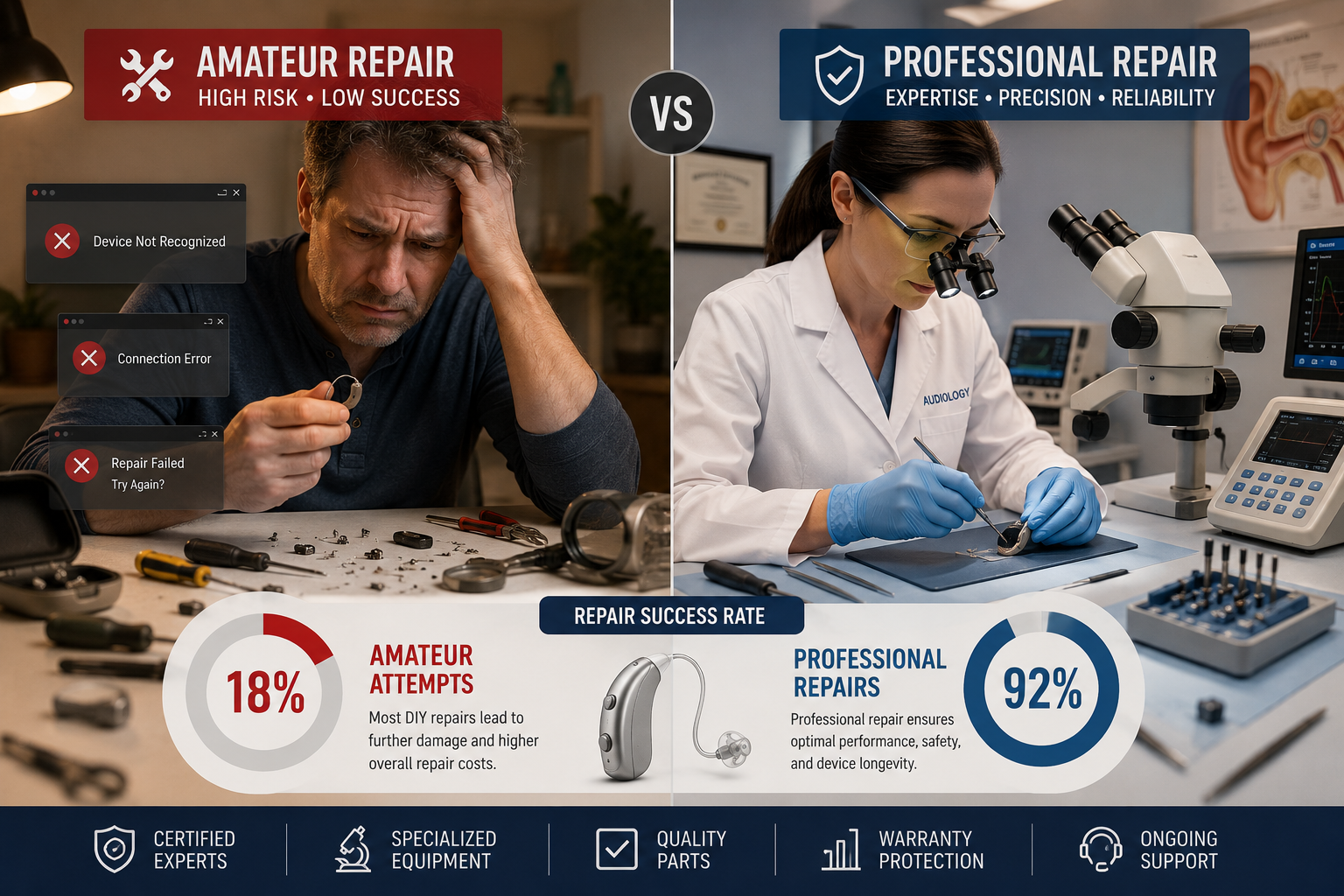
While you can address many minor hearing aid issues at home with basic troubleshooting and cleaning, professional intervention is typically required for internal component failures, significant physical damage, or persistent problems after self-care. Attempting complex repairs yourself often voids warranties and can cause further, irreparable damage to the delicate electronics.
For issues such as a completely dead device after a battery change, persistent weak or distorted sound, physical damage (e.g., drops, water exposure), or issues that recur despite your best cleaning efforts, a professional audiologist or hearing aid specialist is the best course of action. Clinics like Big Sky Audiology in Billings, Montana, aim to resolve many issues like programming adjustments or professional cleaning on the same day to minimize patient downtime [2]. Furthermore, deep learning-based algorithms are being developed to restore speech intelligibility for hearing aid users, a level of repair far beyond DIY capabilities [9].
Here’s a breakdown of when to opt for DIY vs. professional repair:
| Issue Type | DIY Solution (If applicable) | Professional Repair Recommended |
|---|---|---|
| No Sound/Weak Sound | Battery replacement, earwax filter cleaning, tubing check. | Persistent issue after battery/cleaning, internal circuit failure, microphone/receiver malfunction [7]. |
| Whistling/Feedback | Reseat device, check for earwax in ear canal, clean earmold. | Earmold replacement (if worn), internal feedback cancellation system failure, micro-cracks in casing. |
| Intermittent Sound/Crackling | Clean battery contacts, use drying kit. | Loose internal wiring, damaged microphone or speaker, circuit board issues [7]. |
| Physical Damage (e.g., dropped) | Minor scuffs (cosmetic). | Cracked casing, broken components, internal damage from impact. |
| Water Damage | Immediate drying in a desiccator. | Any significant moisture exposure, corrosion of internal components. |
| Battery Door Problems | Minor adjustment if loose. | Broken hinge, latch mechanism failure [12]. |
| Constant Whistling | ||
| Programming/Sound Quality Issues | None (beyond adjusting volume/programs via app). | Recalibration, advanced programming adjustments, software updates, addressing distortion or poor clarity that isn’t external. |
Important Note on Warranties: Most hearing aid warranties explicitly state that unauthorized attempts at repair will void the warranty. This means any complex internal issues will no longer be covered, potentially leading to significantly higher out-of-pocket costs. However, some newer devices, like Phonak Lyric, have received FDA clearance for experienced users to perform self-replacement of the device, which is an exception [6].
How Much Does It Cost to Repair Different Types of Hearing Aids?
The cost to repair different types of hearing aids varies significantly based on the nature of the damage, whether the device is under warranty, and whether the repair is handled locally or by the manufacturer. Generally, out-of-warranty repairs sent back to the manufacturer typically cost between $250 and $350 per hearing aid, while local service centers might offer repairs ranging from $190 to $496 depending on the complexity [7, 10, 11, 12].
Many factors influence the final price. Minor repairs, such as replacing a wax guard, tubing, or earmold, are often inexpensive or can be done at home. However, issues involving internal components like microphones, receivers, or circuit boards, or problems with rechargeable batteries not lasting all day, necessitate more extensive and costly repairs [7]. For instance, Score Components Inc., with over 40 years of experience, offers repairs for all brands and types, including ITE, BTE, body aids, and CIC devices, for $190.00 [11]. Pro Hearing Care offers repairs starting at $199.00 for various issues [12]. In La Grande, Oregon, a local team has provided repairs ranging from $68 to $496 for major brands like Phonak and Starkey [10].
Here’s a general breakdown of repair costs:
- Minor Repairs (often DIY or low cost at clinic):
- Battery replacement: Cost of new batteries (minimal).
- Wax guard/filter replacement: $5-$20 for a pack.
- Tubing replacement (BTE): $10-$30.
- Earmold cleaning/minor adjustment: Often part of a service visit, or free for simple cleaning.
- Intermediate Repairs (local clinic, possibly same-day):
- Professional cleaning and diagnostic checks: $50-$150.
- Receiver/speaker replacement: $100-$250.
- Microphone replacement: $100-$250.
- Programming adjustments: $50-$150 (often included in a service plan).
- Major Repairs (manufacturer-level, out-of-warranty):
- Circuit board repair/replacement: $250-$400.
- Water damage repair (if salvageable): $250-$500, due to labor and component replacement.
- Complete overhaul/refurbishment: $300-$500 per device [7].
Factors Affecting Cost:
- Warranty Status: Repairs under warranty are typically free or incur a small service charge. Most new hearing aids come with a 1-3 year warranty covering manufacturing defects.
- Age of Hearing Aid: Older models may be harder to source parts for, potentially increasing costs or making repair impractical.
- Type of Damage: Physical damage or severe water damage can be more expensive to repair than simple component failures.
- Brand and Model: Some premium or custom-made hearing aids may have higher repair costs due to specialized components. For example, Phonak’s Virto R Infinio, a sophisticated rechargeable custom ITE hearing aid, features complex technology [1].
- Repair Provider: Independent repair shops might offer lower prices than manufacturer-authorized centers, but ensure they use genuine parts and have certified technicians.
What Are the Steps for Professional Hearing Aid Repair and Maintenance?
Professional hearing aid repair and maintenance typically involve a structured process starting with diagnosis, proceeding through specialized repair or factory service, and concluding with thorough testing and patient counseling. This ensures accurate problem identification, effective restoration of function, and guidance for future device care.
When you bring your hearing aid to an audiologist or a dedicated repair center, they follow a systematic approach to ensure your device is returned in optimal condition. This process is designed to handle issues ranging from simple adjustments to complex internal component replacements.
Initial Assessment and Diagnostic Check:
- The audiologist or technician will first gather information from you about the specific issues you’re experiencing, such as “my hearing aid stops working suddenly” or “it makes a crackling noise.”
- They will then perform a visual inspection for obvious damage, earwax buildup, or moisture.
- Diagnostic equipment is used to test the hearing aid’s various components (microphone, receiver, amplifier) and verify its programming against your audiogram.
- For many minor issues like debris in the microphone or incorrect programming, repairs can often be made on-site, sometimes even the same day [2].
On-Site Repair or Adjustment (if applicable):
- For common problems like blocked earwax filters, damaged tubing, or minor programming adjustments, the technician may resolve these in the clinic.
- This can involve professional cleaning using specialized tools and vacuums, replacing external components, or reprogramming the device to better suit your hearing needs.
Factory/Manufacturer Repair (for complex issues):
- If the issue is internal, requires specialized parts, or falls under a major component failure (e.g., circuit board damage, severe water damage), the hearing aid will likely need to be sent to the manufacturer or a certified repair lab.
- The technician will prepare the device, fill out necessary paperwork detailing the problem, and send it off. This process usually takes longer, often two weeks or more [11].
- Manufacturers have the proprietary tools, parts, and expertise to perform intricate repairs and thoroughly refurbish devices.
Quality Control and Testing:
- Once repaired, whether in-clinic or by the manufacturer, the hearing aid undergoes rigorous testing.
- This includes electroacoustic analysis to ensure it meets performance specifications, feedback tests, and sometimes real-ear measurements to verify optimal sound delivery.
Patient Counseling and Follow-up:
- Upon return, the audiologist will demonstrate that the device is working correctly.
- They will offer advice on proper maintenance, cleaning techniques, and battery care to prevent future issues.
- A follow-up appointment might be scheduled to ensure continued satisfaction and address any lingering concerns.
Can Hearing Aids Be Fixed if They Get Wet or Damaged?
Yes, hearing aids can often be fixed if they get wet or damaged, but the success rate depends heavily on the extent of the damage, the type of moisture exposure, and how quickly action is taken. While some water-damaged devices can be fully restored through professional repair, severe damage may render them irreparable.
Water damage is a common culprit for hearing aid malfunction, as moisture can corrode delicate internal electronics. If a hearing aid gets wet, immediate action is crucial:
- Turn off the device and remove the battery: This prevents electrical short circuits.
- Dry externally: Wipe down the hearing aid with a clean, dry cloth.
- Use a drying kit: Place the hearing aid in a dedicated hearing aid drying kit (desiccator) overnight. Avoid using heat sources like hair dryers, which can cause further damage.
For any significant moisture exposure, professional assessment is vital. An audiologist can:
- Thoroughly inspect for corrosion: Using specialized tools, they can identify areas where moisture has caused damage.
- Clean and dry components: They can professionally clean internal components, removing moisture and corrosion.
- Replace damaged parts: Often, specific components like microphones, receivers, or even the circuit board may need replacement if corroded beyond repair.
Physical Damage: Similarly, physical damage from drops or impacts can often be repaired. Common issues include:
- Cracked casing: Minor cracks can sometimes be sealed or the casing replaced.
- Broken components: Microphones, receivers, or battery doors can be replaced if damaged [7, 12].
- Internal wiring: Impact can dislodge or break internal connections, requiring delicate re-soldering or component replacement.
Limitations: While many repairs are possible, there are limits. If the damage is extensive, such as a severely crushed casing or widespread corrosion throughout the circuit board, the cost of repair might exceed the cost of a new device, or the device may simply be beyond salvaging. In these cases, your audiologist will advise on replacement options. It’s also important to remember that such damage, especially if self-inflicted, often falls outside of warranty coverage.
How Long Does a Typical Hearing Aid Repair Take?
The typical duration for a hearing aid repair varies widely depending on the complexity of the issue, whether it can be fixed in-clinic, or if it requires sending the device to the manufacturer. Minor, in-clinic repairs or adjustments can often be completed on the same day, whereas more extensive repairs requiring manufacturer service usually take two to three weeks.
For basic troubleshooting, professional cleaning, or programming adjustments, many audiology clinics aim to provide same-day service, minimizing the inconvenience to the patient [2]. This is common for issues like blocked earwax filters, minor tube replacements, or software recalibrations.
However, when a hearing aid needs to be sent away for repair, the timeframe extends significantly:
- Manufacturer Repairs: If the damage is internal, requires specialized parts, or falls outside the clinic’s repair capabilities, the device will be shipped to the manufacturer or a certified repair lab. This process typically involves:
- Shipping time to the repair center: A few days.
- Diagnosis and repair time at the center: This can be 5-10 business days, depending on the workload and part availability.
- Return shipping time: A few more days.
- Overall, you can expect to be without your hearing aid for approximately two weeks, and sometimes up to three weeks or more for very complex cases or international shipping [11].
Factors Influencing Repair Time:
- Severity of Damage: Simple component replacements are faster than complex circuit board overhauls.
- Part Availability: If a specific part is on backorder, it can delay the repair.
- Warranty Status: Warranty repairs might be prioritized, but the process remains largely the same.
- Provider Workload: Busy clinics or manufacturer service centers may have longer turnaround times.
- Shipping Logistics: The speed and reliability of courier services also play a role.
Many clinics offer loaner hearing aids during the repair period to ensure you maintain some level of auditory support, which is a valuable service to inquire about when dropping off your device for repair.
What Voids a Hearing Aid Warranty?
Several actions and types of damage can void a hearing aid warranty, primarily those related to unauthorized interference, severe physical trauma, or neglect that falls outside normal wear and tear. Understanding these conditions is crucial to protect your investment and ensure future repairs are covered.
Most hearing aid warranties, which typically last one to three years, cover manufacturing defects and certain malfunctions under normal use. However, they explicitly outline scenarios that render the warranty null and void.
Here are the common reasons a hearing aid warranty can be voided:
- Unauthorized Repair Attempts: This is one of the most significant warranty infringements. If you or an uncertified technician attempt to open, repair, or tamper with the internal components of the hearing aid, the manufacturer will void the warranty. This is because such actions can introduce new damage or make it impossible to determine the original cause of the malfunction.
- Severe Physical Damage: While minor wear and tear might be covered, significant physical damage from dropping the hearing aid, crushing it, or other impacts typically voids the warranty. This is usually considered user-induced damage rather than a manufacturing defect.
- Water or Moisture Damage: Most warranties do not cover damage caused by exposure to water, sweat, or excessive moisture (unless the device is specifically rated for such exposure, like some waterproof models). Damage from showering, swimming, or extreme humidity is generally not covered.
- Neglect or Improper Maintenance: Failing to regularly clean your hearing aids, allowing excessive earwax or debris to build up, or storing them improperly can lead to malfunctions that are not covered under warranty. While some issues like blocked wax traps are easily fixed, persistent problems from neglect may be denied coverage.
- Using Non-Approved Accessories or Parts: Using generic batteries, chargers, or other accessories that are not specifically approved or provided by the manufacturer can sometimes void the warranty if they lead to device malfunction.
- Loss or Theft: Warranties typically cover repairs due to defects, not the replacement of lost or stolen devices. Some manufacturers offer separate loss and damage insurance for an additional cost.
- Expiration of Warranty Period: Once the warranty period (e.g., 1, 2, or 3 years) has passed, any repairs will be out-of-pocket expenses. This is when the typical out-of-warranty repair costs of $250-$350 per device come into play [7].
It is always advisable to consult your hearing aid’s specific warranty documentation or contact your audiologist for clarity on what is covered and what can void your warranty.
Are Hearing Aid Repairs Covered by Insurance?
Hearing aid repairs are generally not covered by Original Medicare, but many Medicare Advantage (Part C) plans do offer coverage for hearing benefits, including repairs. Private insurance coverage for repairs varies widely, often depending on the specific policy and whether the hearing aid itself was covered.
Understanding insurance coverage for hearing aid repairs can be complex. Here’s a breakdown:
- Original Medicare (Parts A and B): Original Medicare explicitly does not cover hearing aids or their repairs [4]. This is a significant point for many seniors who rely on Medicare for their healthcare needs.
- Medicare Advantage (Part C): This is where coverage often becomes available. As of September 2025, about 97% of Medicare Advantage plans offer some hearing benefits that are not provided by Original Medicare, and this frequently includes coverage for hearing aid repairs [4]. The extent of coverage (e.g., a specific dollar allowance, deductible, copayments) will vary by plan, so it is essential to review your specific plan details.
- Private Health Insurance: Coverage for hearing aid repairs with private insurance plans is highly dependent on the individual policy. Some plans, particularly comprehensive ones or those purchased through an employer, may offer partial or full coverage for hearing aids and their associated repairs. However, many plans still consider hearing aids to be an elective or non-essential item and do not provide coverage. It’s crucial to contact your insurance provider directly to understand your benefits.
- VA Benefits: For eligible U.S. veterans, hearing aids and their repairs are often covered by the Department of Veterans Affairs. For example, devices like Phonak’s Virto R Infinio were made available to U.S. veterans in November 2025 [1].
- Out-of-Pocket Costs: If insurance coverage is not available or exhausted, you will be responsible for the full cost of the repair. As mentioned, out-of-warranty repairs can range from $190 to $496, depending on the service provider and the extent of damage [7, 10, 11, 12].
Recommendations:
- Review your policy: Always read the fine print of your insurance policy regarding hearing benefits.
- Contact your provider: Call your insurance company directly to inquire about specific coverage for hearing aid repairs, deductibles, and any network requirements for repair services.
- Consult your audiologist: Your audiologist’s office staff often has experience navigating insurance claims and can provide guidance or even help with pre-authorization if needed.
Conclusion
Maintaining optimal sound quality from your hearing aids is essential for daily communication and quality of life. While minor issues can often be addressed at home with careful troubleshooting and cleaning, understanding when to seek professional hearing aid repair is paramount. From addressing common problems like no sound or whistling to navigating the complexities of water damage and warranty limitations, expert intervention ensures your devices receive the precise care they need. Remember that repair costs vary, and while Original Medicare typically doesn’t cover repairs, many Medicare Advantage plans do. Regular professional check-ups, prompt attention to malfunctions, and adherence to maintenance guidelines are your best defense against prolonged downtime and unexpected expenses. If your hearing aid stops working suddenly, starts crackling, or shows signs of physical damage, consult your audiologist without delay to restore your sound clarity.
Related Reading
- Maintaining Your Hearing Aids: A Comprehensive Guide
- Choosing the Right Audiologist: What to Look For
- Understanding Your Hearing Aid Warranty
References
[1] Phonak S Smallest And First 29500 – https://www.audiologyonline.com/releases/phonak-s-smallest-and-first-29500?utm_source=openai [2] Big Sky Audiology Streamlines Hearing Aid Repair Billings Minimize Patient – https://natlawreview.com/press-releases/big-sky-audiology-streamlines-hearing-aid-repair-billings-minimize-patient?utm_source=openai [4] Will Medicare Pay For Hearing Aid Repairs – https://www.solace.health/articles/will-medicare-pay-for-hearing-aid-repairs?utm_source=openai [6] Phonak Lyric Hearing Aid Now Fda Cleared For Self Replacement By Some Experienced Users – https://www.hearingtracker.com/news/phonak-lyric-hearing-aid-now-fda-cleared-for-self-replacement-by-some-experienced-users?utm_source=openai [7] Cost Of Repairing A Hearing Aid – https://hearinginsider.com/cost-of-repairing-a-hearing-aid?utm_source=openai [8] Hearing Aid Repair Rates 754 – https://www.audiologyonline.com/ask-the-experts/hearing-aid-repair-rates-754?utm_source=openai [9] arxiv – https://arxiv.org/abs/2206.11567?utm_source=openai [10] Hearing Aid Repairs – https://lagrandehearing.org/services/hearing-aid-repairs?utm_source=openai [11] Hearing Aid Repair Services by Score Components Inc. – https://www.scoreinc.org/?utm_source=openai [12] Hearing Aid Repair Services by Pro Hearing Care – https://www.prohearingcare.com/?utm_source=openai
