
Hearing Aids Amazon: Your Complete 2026 Guide to Smart Shopping and Better Hearing
Imagine waking up one morning to discover that sounds in one ear have become muffled or completely silent. The panic sets in, questions flood your mind, and suddenly you’re searching for solutions. If you’ve experienced sudden hearing changes, you’re likely exploring every option available—including hearing aids amazon offers. With thousands of devices listed online and prices ranging from $20 to $2,000, navigating the world of hearing aids on Amazon can feel overwhelming. This comprehensive guide will help you understand what’s available, what to watch out for, and how to make an informed decision that protects your hearing health.
Key Takeaways
- 🛒 Amazon offers various hearing assistance devices, but true hearing aids require professional fitting and prescription in most cases
- ⚠️ Personal Sound Amplification Products (PSAPs) dominate Amazon’s hearing aid category and are NOT the same as FDA-regulated hearing aids
- 💰 Over-the-counter (OTC) hearing aids became available in 2022, making some legitimate devices accessible through Amazon without a prescription
- 🔍 Professional evaluation is essential before purchasing any hearing device, especially if experiencing sudden hearing loss in one ear
- ✅ Quality varies dramatically on Amazon—reading reviews, checking certifications, and understanding return policies are crucial steps
Understanding the Hearing Aids Amazon Marketplace in 2026
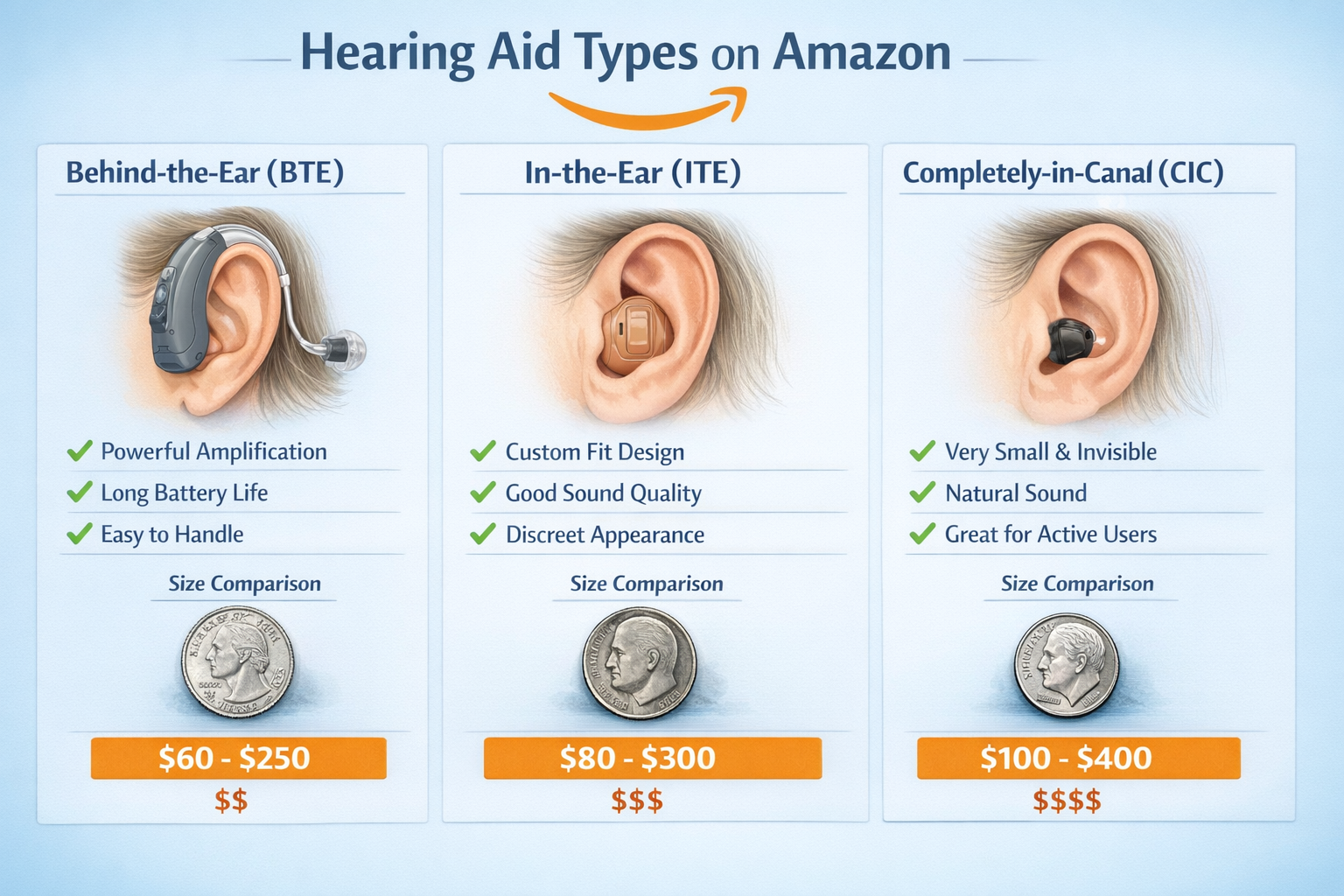
The landscape of hearing aids amazon sells has evolved significantly since the FDA approved over-the-counter hearing aids in 2022. Today’s Amazon marketplace contains a complex mix of products, from legitimate OTC hearing aids to simple sound amplifiers marketed with misleading claims.
What You’ll Actually Find When Searching for Hearing Aids Amazon
When you search for hearing aids on Amazon, the results typically include:
Over-the-Counter (OTC) Hearing Aids 🎯
These are FDA-regulated medical devices designed for adults with perceived mild to moderate hearing loss. They can be purchased without a prescription or professional fitting, though consultation with a hearing professional is still recommended.
Personal Sound Amplification Products (PSAPs) 📢
These devices amplify all sounds equally and are intended for people with normal hearing who want to enhance environmental sounds (like hunters or birdwatchers). They are NOT medical devices and should not be used to treat hearing loss.
Assistive Listening Devices 📺
These include TV listening systems, telephone amplifiers, and similar products designed for specific situations rather than all-day wear.
Hearing Aid Accessories 🔋
Batteries, cleaning kits, dehumidifiers, and other supplies for existing hearing aids.
The Critical Difference: OTC Hearing Aids vs. PSAPs
Understanding this distinction could save you money and protect your hearing health:
| Feature | OTC Hearing Aids | PSAPs |
|---|---|---|
| FDA Regulation | Yes – Medical Device | No – Consumer Electronics |
| Purpose | Treat mild-moderate hearing loss | Amplify sounds for normal hearing |
| Customization | Adjustable for hearing loss patterns | Basic volume control only |
| Price Range | $500-$2,000+ | $20-$300 |
| Sound Processing | Sophisticated, frequency-specific | Simple amplification |
| Quality Standards | Rigorous testing required | Varies widely |
Many products on Amazon blur these lines intentionally, using terms like “hearing amplifier” or “hearing assistance device” to avoid FDA scrutiny while implying medical benefits they cannot legally claim.
Why Sudden Hearing Loss Requires Professional Attention First
If you’re experiencing sudden hearing loss in one ear, purchasing hearing aids on Amazon should not be your first step. Sudden sensorineural hearing loss (SSHL) is a medical emergency that requires immediate evaluation.
Conditions That Mimic Hearing Loss
Before investing in any hearing device, a proper diagnosis is essential. What seems like hearing loss requiring amplification might actually be:
- Earwax blockage (cerumen impaction) – easily treatable
- Ear infection – requires antibiotics
- Eustachian tube dysfunction – needs medical management
- Acoustic neuroma – requires urgent medical attention
- Ménière’s disease – needs specialized treatment
- Sudden sensorineural hearing loss – time-sensitive medical emergency
Understanding the causes of hearing loss in one ear can help you recognize when professional evaluation is necessary rather than self-treatment with Amazon devices.
The Danger of Delayed Diagnosis
Sudden hearing loss is often reversible if treated within 72 hours. Spending time trying different Amazon devices could mean missing this critical treatment window. Corticosteroids and other medical interventions can restore hearing in many cases—but only if administered promptly.
“The most common mistake I see is patients trying over-the-counter solutions for weeks before seeking help. By then, the window for effective treatment has often closed.” — Dr. Sarah Chen, Audiologist
If you’re experiencing any of these hearing loss symptoms, seek medical evaluation immediately:
- Sudden hearing loss in one or both ears
- Hearing loss accompanied by dizziness or vertigo
- Hearing loss with severe ear pain
- Hearing loss after head trauma
- Hearing loss with discharge from the ear
Legitimate Hearing Aids Amazon Offers: What to Look For
Once you’ve received proper medical evaluation and diagnosis, Amazon can be a legitimate source for certain hearing devices. Here’s how to identify quality products among the thousands of listings.
Top-Rated OTC Hearing Aids Available on Amazon in 2026
Several reputable manufacturers now sell FDA-cleared OTC hearing aids through Amazon:
1. Sony CRE-C10 and CRE-E10 🏆
- FDA-cleared OTC hearing aids
- Developed with WS Audiology
- Self-fitting technology
- Price range: $999-$1,299
- Prescription-free for mild-moderate loss
2. Jabra Enhance Plus 🎵
- FDA-cleared medical device
- Bluetooth connectivity
- App-based customization
- Price: Around $800
- Good for tech-savvy users
3. Eargo Hearing Aids 🔊
- Multiple OTC models available
- Virtually invisible design
- Rechargeable batteries
- Price range: $799-$2,950
- Strong customer support
4. Audicus 💙
- Budget-friendly OTC options
- Online hearing test included
- 45-day trial period
- Price range: $699-$999
- Good starter option
Red Flags to Avoid When Shopping Hearing Aids Amazon
Not all products deserve your trust or money. Watch for these warning signs:
❌ Unrealistic claims – “Restores perfect hearing” or “Military-grade technology”
❌ Extremely low prices – Quality hearing devices cannot be manufactured for $30
❌ No return policy – Legitimate sellers offer at least 30-day returns
❌ Vague product descriptions – Lack of technical specifications or certifications
❌ No customer service contact – No phone number or email for support
❌ Fake reviews – Multiple reviews posted on the same day with similar wording
❌ Missing FDA information – No mention of FDA registration or clearance
Essential Features to Prioritize
When evaluating hearing aids amazon listings, look for these critical features:
✅ FDA clearance or registration number
✅ Adjustable frequency response (not just volume)
✅ Feedback cancellation technology
✅ Multiple listening programs or modes
✅ Rechargeable or long-lasting batteries
✅ Comfortable, secure fit options
✅ Warranty of at least 1 year
✅ Professional customer support
✅ Smartphone app for adjustments (for modern devices)
✅ Clear return and trial period policies
🔍 Amazon Hearing Aid Product Evaluator
Answer these questions about the Amazon listing to evaluate product quality
Product Quality Score
Comparing Costs: Hearing Aids Amazon vs. Traditional Audiologist
One of the main reasons people turn to hearing aids amazon offers is cost. Understanding the true price comparison helps you make an informed decision.
Price Breakdown: Different Purchase Paths
Traditional Audiologist Route:
- Initial consultation and hearing test: $100-$250
- Hearing aids (pair): $2,000-$8,000
- Fitting and programming: Often included
- Follow-up adjustments: Usually included for 1-3 years
- Total first-year cost: $2,100-$8,250
Amazon OTC Hearing Aids:
- No professional consultation: $0 (but recommended separately)
- OTC hearing aids (pair): $500-$2,000
- Self-fitting via app: Included
- Customer support: Varies by manufacturer
- Total first-year cost: $500-$2,000 (plus optional professional consultation)
Amazon PSAPs (Not Recommended for Hearing Loss):
- No consultation: $0
- Amplification device: $20-$300
- No customization: N/A
- Limited or no support: N/A
- Total cost: $20-$300 (but not appropriate for treating hearing loss)
Hidden Costs to Consider
When evaluating the true cost of hearing aids amazon sells, factor in:
💰 Batteries or charging accessories – $50-$150 annually
💰 Replacement parts – Domes, wax guards, tubes ($30-$100 annually)
💰 Professional hearing test – Still recommended ($100-$250)
💰 Potential return shipping – If the device doesn’t work for you
💰 Lost opportunity cost – If you buy a PSAP instead of proper treatment
When Amazon Devices Make Financial Sense
Amazon can be a cost-effective option when:
✅ You have confirmed mild to moderate hearing loss from a professional
✅ You’re tech-savvy and comfortable with self-fitting apps
✅ You have realistic expectations about performance
✅ The manufacturer offers strong customer support
✅ You’re willing to invest time in proper adjustment
✅ You understand the limitations compared to prescription devices
The Professional Consultation Advantage
Even when purchasing hearing aids amazon offers, professional guidance provides significant value that shouldn’t be overlooked.
What an Audiologist Provides That Amazon Cannot
Comprehensive Hearing Assessment 🔬
- Pure-tone audiometry testing
- Speech recognition testing
- Tympanometry (middle ear function)
- Otoacoustic emissions testing
- Identification of underlying medical conditions
Customized Programming 🎛️
- Precise adjustment for your specific hearing loss pattern
- Real-ear measurements to verify proper amplification
- Fine-tuning based on your listening environments
- Adjustments for speech clarity vs. background noise
Ongoing Support and Monitoring 📊
- Regular hearing checks to track changes
- Reprogramming as hearing changes
- Troubleshooting technical issues
- Cleaning and maintenance services
Medical Oversight 🏥
- Identification of conditions requiring medical treatment
- Referral to ENT specialists when needed
- Monitoring for symptoms of ear nerve damage
- Coordination with other healthcare providers
Hybrid Approach: Best of Both Worlds
Many people successfully combine professional expertise with Amazon’s convenience:
- Get professionally evaluated – Obtain a complete hearing assessment and diagnosis
- Discuss OTC options – Ask your audiologist about suitable Amazon devices
- Purchase through Amazon – Take advantage of competitive pricing
- Return for programming help – Some audiologists offer fee-for-service programming of OTC devices
- Schedule annual check-ups – Monitor hearing changes over time
This approach typically costs less than traditional hearing aids while maintaining professional oversight for optimal outcomes.
Reading Amazon Reviews: What to Trust and What to Question
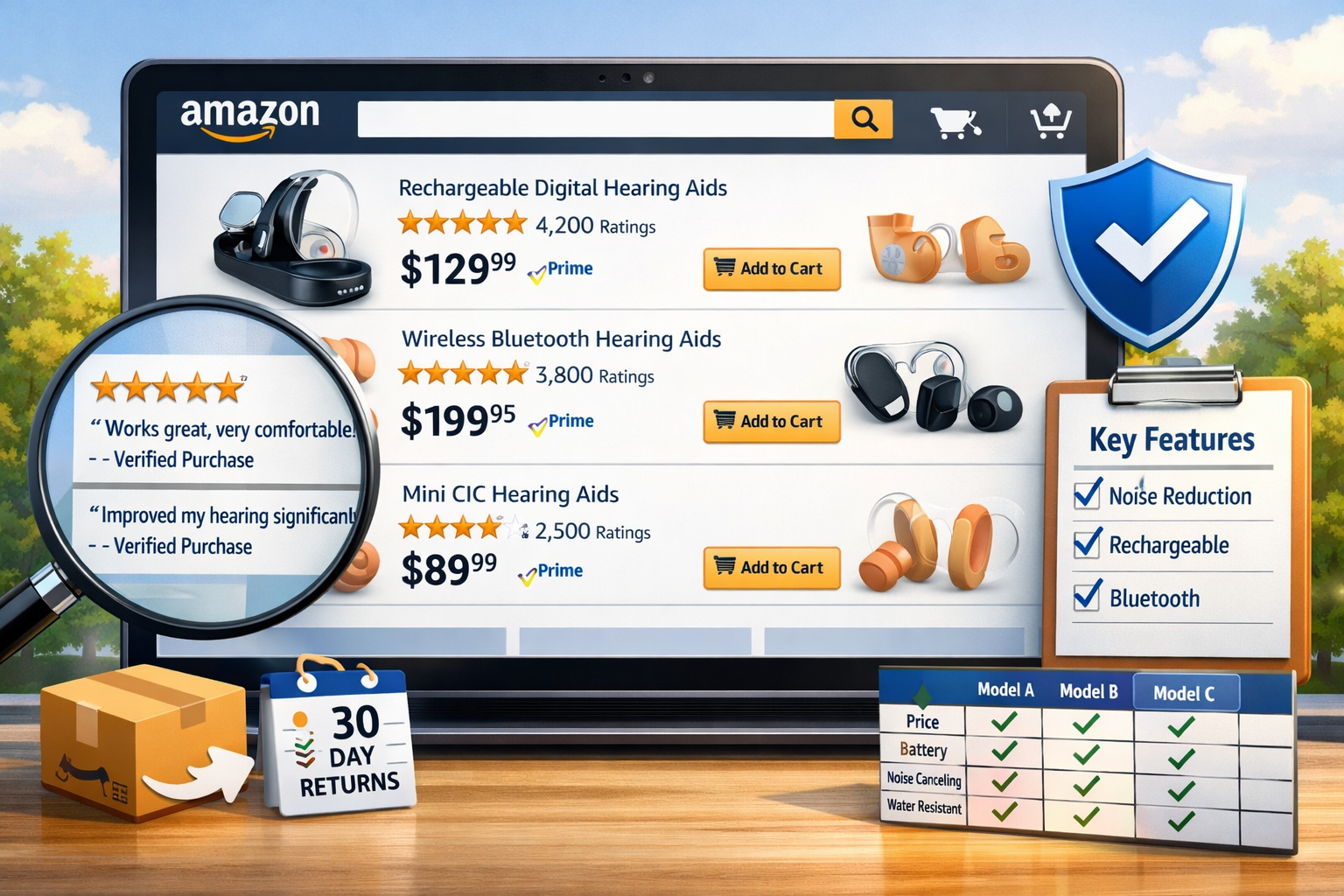
Customer reviews are invaluable when shopping for hearing aids amazon lists, but not all reviews are equally reliable or relevant.
Identifying Genuine, Helpful Reviews
Look for reviews that:
- Describe specific use cases and environments
- Mention both positives and negatives
- Include details about the reviewer’s hearing loss type
- Discuss the adjustment period and learning curve
- Compare to other devices or previous hearing aids
- Provide updates after extended use (3+ months)
Example of a helpful review:
“I have mild high-frequency hearing loss confirmed by my audiologist. These helped significantly with conversation in quiet settings, but I still struggle in restaurants. The app took some time to learn, but customer support walked me through it. Battery life is about 16 hours as advertised. Worth the price for my needs, but not a miracle cure.”
Red Flags in Reviews
Be skeptical of reviews that:
- Use generic phrases like “amazing product” without specifics
- Claim complete restoration of hearing
- Were all posted within a few days
- Have similar wording or writing styles
- Only give 5-star ratings with no constructive feedback
- Don’t mention any learning curve or adjustment period
- Include obvious grammatical errors or awkward phrasing
Example of a suspicious review:
“This hearing aid is best product ever! My hearing is now perfect like young person. Everyone should buy immediately. Five stars recommend highly to all peoples.”
Questions to Ask Based on Reviews
After reading reviews of hearing aids amazon products, consider:
- Do multiple reviewers mention the same strengths and weaknesses?
- Are there verified purchase badges on most reviews?
- Do negative reviews describe fixable issues or fundamental flaws?
- How does the company respond to negative feedback?
- Are there recent reviews, or did they stop months ago?
- Do reviewers mention customer service experiences?
Understanding hearing loss symptoms can help you evaluate whether reviewers have similar hearing challenges to yours, making their experiences more relevant.
Safety Considerations and Potential Risks
While many hearing aids amazon offers are safe when used appropriately, understanding potential risks protects your hearing health.
Risks of Improper Amplification
Over-amplification 📢
Using devices set too loud or PSAPs for actual hearing loss can cause:
- Further hearing damage from excessive volume
- Acoustic trauma to sensitive inner ear structures
- Tinnitus (ringing in the ears) development or worsening
- Listening fatigue and headaches
If you’re already experiencing ear ringing, improper amplification can make it significantly worse.
Delayed Medical Treatment ⏰
Relying on Amazon devices without professional evaluation may delay diagnosis of:
- Treatable medical conditions causing hearing loss
- Progressive hearing loss requiring intervention
- Tumors or other serious underlying conditions
- Infections requiring antibiotics
Poor Fit and Comfort Issues 👂
Ill-fitting devices purchased online can cause:
- Ear canal irritation or infection
- Feedback (whistling) that’s annoying and potentially harmful
- Inadequate seal leading to poor performance
- Discomfort that prevents consistent use
Safe Usage Guidelines
To minimize risks when using hearing aids amazon products:
✅ Start with professional evaluation – Know what you’re treating
✅ Begin at lower volumes – Gradually increase as needed
✅ Follow manufacturer instructions – Particularly for insertion and cleaning
✅ Monitor for discomfort – Remove devices if you experience pain
✅ Keep devices clean – Prevent ear infections
✅ Schedule follow-up testing – Track hearing changes annually
✅ Be realistic about expectations – Hearing aids improve but don’t restore perfect hearing
When to Stop Using and Seek Help
Discontinue use and consult a healthcare provider if you experience:
- Sudden worsening of hearing
- Pain or discharge from the ear
- Severe dizziness or balance problems
- New or worsening tinnitus
- Skin irritation or infection signs
- Headaches associated with device use
Understanding hearing damage helps you recognize warning signs that require professional attention.
Alternatives to Hearing Aids Amazon: Other Options to Consider
While Amazon offers convenience, exploring all options ensures you make the best choice for your hearing health.
Direct-to-Consumer Hearing Aid Companies
Several companies sell directly to consumers online with more comprehensive support than typical Amazon sellers:
Eargo – Premium invisible devices with strong customer service
Lively – Unlimited audiologist support included
Audicus – Budget-friendly with professional guidance available
Lexie Hearing – Powered by Bose technology
Jabra Enhance – Telehealth audiology services included
These companies often provide:
- Virtual hearing tests
- Remote programming by licensed audiologists
- Longer trial periods (45-100 days)
- More comprehensive warranties
- Better customer support than Amazon sellers
Costco Hearing Aids
Costco offers exceptional value for members:
- In-store audiologists for testing and fitting
- Premium hearing aid brands at discounted prices
- Comprehensive follow-up care included
- Prices typically $1,000-$2,000 per pair
- Excellent return policies
Traditional Audiology Clinics
For complex hearing loss or medical concerns, traditional clinics provide:
- Most advanced hearing aid technology
- Extensive customization options
- Comprehensive medical care
- Long-term relationship with your provider
- Coordination with other healthcare needs
Hearing Assistance Programs
If cost is a primary concern, investigate:
Financial Assistance Programs:
- Hearing Loss Association of America resources
- Lions Club hearing aid programs
- State vocational rehabilitation services
- Veterans Affairs benefits (for eligible veterans)
- Medicaid coverage (varies by state)
Clinical Trials:
- University research programs
- Manufacturer testing programs
- Free or reduced-cost devices in exchange for participation
For seniors specifically, there are effective hearing health strategies that include various assistance programs and resources.
Complementary Approaches to Hearing Health
Whether you purchase hearing aids amazon offers or obtain devices elsewhere, supporting overall hearing health maximizes benefits.
Hearing Support Supplements
While supplements cannot replace proper hearing devices, some people explore hearing support supplements as complementary approaches. Research on supplements like:
- Magnesium – May protect against noise-induced hearing loss
- Antioxidants – Potential protective effects for inner ear cells
- B vitamins – Support nerve health
- Omega-3 fatty acids – Anti-inflammatory properties
Important: Always consult with healthcare providers before starting supplements, especially if you have medical conditions or take medications.
Lifestyle Modifications
Protect your remaining hearing and optimize hearing aid performance:
🎧 Limit noise exposure – Use hearing protection in loud environments
🚭 Avoid smoking – Smoking increases hearing loss risk
💪 Exercise regularly – Improves blood flow to inner ear
🩺 Manage chronic conditions – Control diabetes, hypertension
🧘 Reduce stress – Stress can worsen tinnitus and hearing issues
🔊 Practice good listening habits – Face speakers, reduce background noise
Assistive Listening Devices
Supplement hearing aids with specialized devices:
- TV listening systems – Direct audio streaming
- Telephone amplifiers – Enhanced phone conversations
- Alerting devices – Visual or vibrating alarms
- FM systems – Better hearing in challenging environments
Tinnitus Management
Many people with hearing loss also experience tinnitus. Explore natural remedies for tinnitus and tinnitus help resources to address both conditions comprehensively.
Making Your Decision: A Step-by-Step Action Plan
Ready to move forward with purchasing hearing devices? Follow this systematic approach for the best outcomes.
Step 1: Get Professionally Evaluated (Within 72 Hours for Sudden Loss)
Schedule an appointment with:
- Primary care physician (for referral and initial assessment)
- Audiologist (for comprehensive hearing testing)
- ENT specialist (if medical issues are suspected)
Bring to your appointment:
- List of medications
- Description of when hearing changes began
- Information about noise exposure history
- Questions about treatment options
Step 2: Understand Your Diagnosis
Ask your provider:
- What type of hearing loss do I have?
- What caused it?
- Is it likely to progress?
- What are my treatment options?
- Am I a candidate for OTC hearing aids?
- What features should I prioritize?
Step 3: Research Appropriate Devices
If OTC devices are suitable:
- Review FDA-cleared options on Amazon
- Compare features to your specific needs
- Read recent customer reviews thoroughly
- Check manufacturer websites for additional information
- Use the interactive evaluator tool above to assess products
Create a comparison chart:
- Price
- Battery type and life
- Warranty length
- Trial period
- Customer support options
- Specific features (Bluetooth, rechargeability, etc.)
Step 4: Make an Informed Purchase
Before clicking “Buy”:
- Verify FDA clearance or registration
- Confirm return policy details
- Save all product information
- Screenshot specifications and promises
- Check seller ratings and feedback
- Ensure you’re buying from authorized sellers
Step 5: Optimize Your New Devices
Upon receiving your hearing aids:
- Read all instructions thoroughly
- Download and set up any required apps
- Start with lower volume settings
- Gradually increase amplification
- Wear consistently to adjust
- Keep detailed notes about performance
- Contact customer support with questions
Step 6: Schedule Follow-Up Care
Within 3-6 months:
- Return to audiologist for verification testing
- Discuss any challenges or limitations
- Consider professional programming if needed
- Schedule annual hearing tests
- Monitor for any changes in hearing
Understanding the Most Common Causes of Hearing Loss
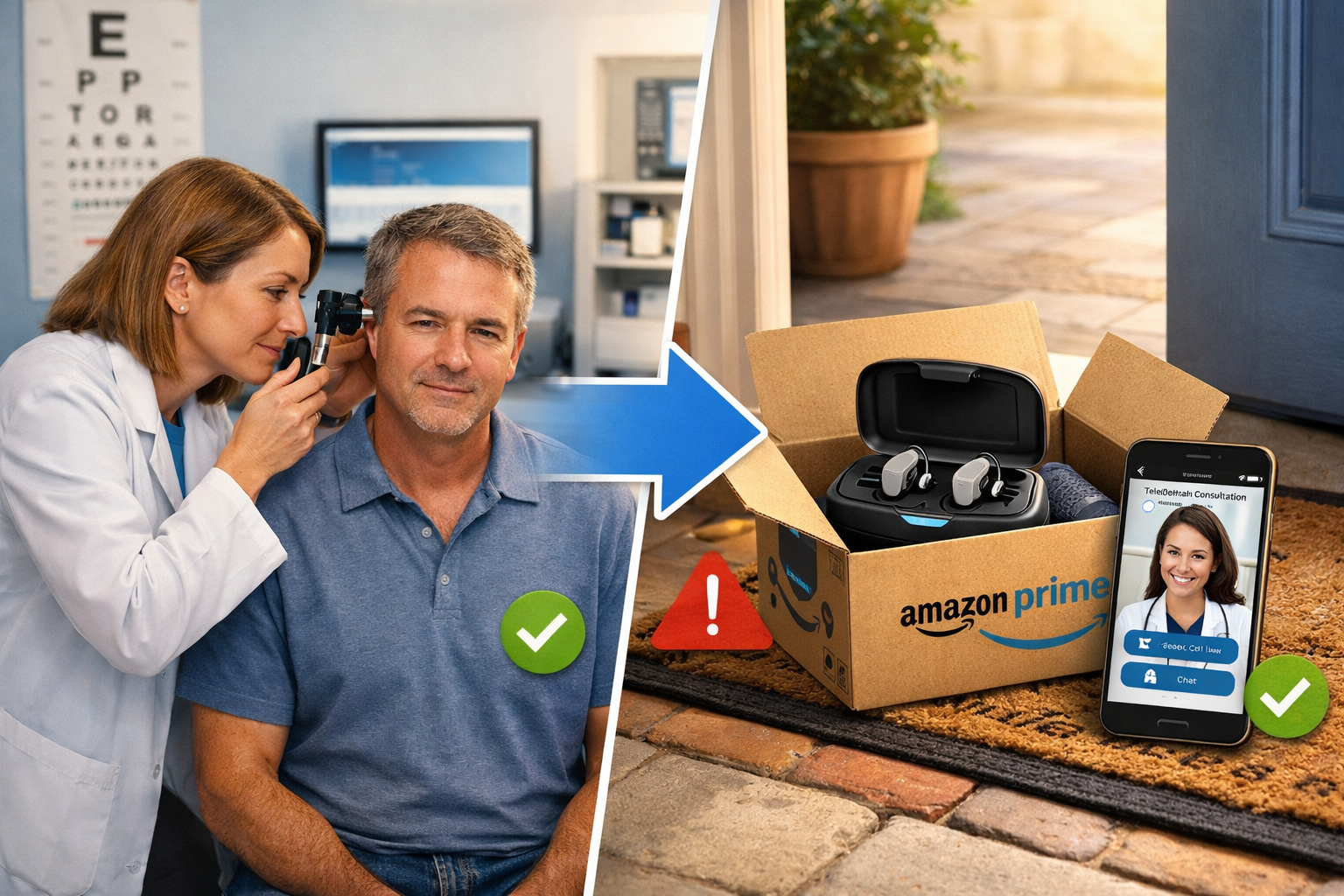
While hearing aids amazon offers can address hearing loss symptoms, understanding root causes helps with prevention and appropriate treatment. The most common causes include:
Age-related hearing loss (Presbycusis) – Gradual loss affecting high frequencies first
Noise-induced hearing loss – From occupational or recreational noise exposure
Earwax blockage – Often reversible with proper cleaning
Ear infections – May cause temporary or permanent damage
Ototoxic medications – Certain drugs can damage hearing
Genetic factors – Hereditary hearing loss conditions
Knowing your specific cause helps determine whether Amazon devices are appropriate or if you need specialized medical treatment.
Frequently Asked Questions About Hearing Aids Amazon
Q: Are hearing aids on Amazon real hearing aids?
A: Some are legitimate FDA-cleared OTC hearing aids, but many are PSAPs (personal sound amplification products) that are not medical devices. Check for FDA clearance before purchasing.
Q: Can I buy prescription hearing aids on Amazon?
A: No. Prescription hearing aids require professional fitting and cannot be sold directly to consumers on Amazon. You’ll find OTC hearing aids and PSAPs instead.
Q: How much should I expect to spend on quality hearing aids from Amazon?
A: Legitimate OTC hearing aids typically cost $500-$2,000 per pair. Products under $200 are usually PSAPs, not true hearing aids.
Q: Do I need a hearing test before buying from Amazon?
A: While not legally required for OTC devices, a professional hearing test is strongly recommended to ensure you’re treating the right problem and choosing appropriate devices.
Q: Can Amazon hearing aids damage my hearing?
A: If used improperly (too loud) or if PSAPs are used to treat actual hearing loss, yes. Always start with professional evaluation and use devices as directed.
Q: What’s the difference between $50 and $1,500 hearing aids on Amazon?
A: The $50 devices are almost certainly basic amplifiers (PSAPs), while $1,500 devices may be legitimate FDA-cleared OTC hearing aids with sophisticated sound processing, customization, and support.
Q: Do Amazon hearing aids work for severe hearing loss?
A: No. OTC hearing aids are approved only for mild to moderate hearing loss. Severe hearing loss requires prescription hearing aids fitted by professionals.
Q: Can I return hearing aids to Amazon if they don’t work?
A: Return policies vary by seller. Check specific return windows and conditions before purchasing. Many legitimate manufacturers offer 30-45 day trial periods.
The Future of Hearing Aids and Online Shopping in 2026
The hearing aid marketplace continues evolving rapidly. Understanding current trends helps you make future-proof decisions.
Emerging Technologies in OTC Hearing Aids
Artificial Intelligence Integration 🤖
- Automatic environment detection and adjustment
- Learning user preferences over time
- Predictive adjustments based on location and time
Enhanced Connectivity 📱
- Seamless smartphone integration
- Direct streaming from multiple devices
- Remote programming by audiologists
Improved Miniaturization 🔬
- Smaller, more discreet devices
- Longer battery life in compact designs
- Better cosmetic appeal
Health Monitoring Features 💓
- Heart rate monitoring
- Fall detection
- Activity tracking
- Integration with health apps
Regulatory Changes and Market Expansion
The FDA’s OTC hearing aid rule continues influencing the market:
- More major manufacturers entering the OTC space
- Increased competition driving prices down
- Better quality control and standardization
- Clearer labeling distinguishing hearing aids from PSAPs
- Enhanced consumer protections
What This Means for Amazon Shoppers
Expect to see:
- Wider selection of legitimate OTC hearing aids
- Better product descriptions and specifications
- More competitive pricing
- Improved customer support from manufacturers
- Stricter enforcement against misleading PSAPs
Be prepared to:
- Research more carefully as options expand
- Stay informed about new technologies
- Verify FDA clearance as more products launch
- Take advantage of improving trial periods and warranties
Conclusion: Making Smart Choices About Hearing Aids Amazon
Navigating the world of hearing aids amazon offers requires knowledge, caution, and realistic expectations. While Amazon can be a legitimate source for hearing assistance devices, success depends on approaching your purchase strategically.
Key Principles for Success
Prioritize professional evaluation first – Especially for sudden hearing loss, which may be a medical emergency. Understanding whether you have hearing loss in one ear and ringing or other specific symptoms helps ensure appropriate treatment.
Distinguish between device types – Know the critical difference between FDA-cleared OTC hearing aids and simple PSAPs. Your hearing health deserves proper treatment, not just amplification.
Research thoroughly – Use the interactive evaluator tool, read reviews critically, verify FDA clearance, and compare multiple options before purchasing.
Maintain realistic expectations – Even the best OTC hearing aids cannot match the customization and performance of professionally fitted prescription devices. They’re a valuable option for mild to moderate loss, but not a universal solution.
Combine convenience with expertise – Take advantage of Amazon’s competitive pricing and convenience, but don’t skip professional guidance. A hybrid approach often delivers the best outcomes.
Your Next Steps
If you’re experiencing hearing difficulties:
- Seek immediate medical evaluation if you have sudden hearing loss (within 72 hours)
- Schedule a comprehensive hearing test with a licensed audiologist
- Discuss OTC options with your hearing healthcare provider
- Research appropriate devices using the guidance in this article
- Make an informed purchase from reputable sellers with strong support
- Commit to the adjustment period – Give devices adequate time to work
- Schedule follow-up care to monitor your hearing health over time
Final Thoughts
The availability of hearing aids amazon sells represents both opportunity and challenge. The opportunity lies in increased accessibility, affordability, and convenience for people with mild to moderate hearing loss. The challenge is navigating a marketplace where quality varies dramatically and misleading products abound.
By approaching your purchase with knowledge, caution, and professional guidance, you can successfully leverage Amazon’s marketplace to improve your hearing health. Remember that hearing aids are just one component of comprehensive hearing care—they work best when combined with professional oversight, healthy lifestyle choices, and realistic expectations.
Your hearing health is invaluable. Whether you ultimately purchase through Amazon, a direct-to-consumer company, Costco, or a traditional audiologist, the most important decision is to take action. Untreated hearing loss affects quality of life, relationships, cognitive health, and overall wellbeing. With the right approach and appropriate devices, you can reconnect with the sounds that matter most.
For more comprehensive information about hearing health, visit the Improve Hearing Health homepage for additional resources and guidance.
References
[1] U.S. Food and Drug Administration. (2022). “FDA Finalizes Historic Rule Enabling Access to Over-the-Counter Hearing Aids for Millions of Americans.” FDA.gov.
[2] Lin, F. R., et al. (2023). “Hearing Intervention versus Health Education Control to Reduce Cognitive Decline in Older Adults.” JAMA Network.
[3] National Institute on Deafness and Other Communication Disorders. (2023). “Quick Statistics About Hearing.” NIDCD.NIH.gov.
[4] American Speech-Language-Hearing Association. (2023). “The Difference Between Hearing Aids and Personal Sound Amplification Products.” ASHA.org.
[5] Consumer Reports. (2026). “Over-the-Counter Hearing Aids: What You Need to Know.” ConsumerReports.org.
[6] Johns Hopkins Medicine. (2023). “Sudden Sensorineural Hearing Loss.” HopkinsMedicine.org.
[7] Hearing Loss Association of America. (2023). “Financial Assistance for Hearing Aids.” HearingLoss.org.
